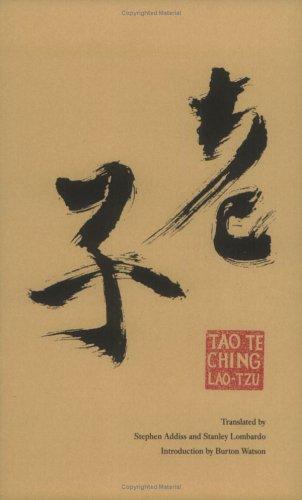
Tao Te Ching
Laozi (-500)
“Eighty-one verses that dismantle everything you think you know about power, language, and the meaning of a useful life.”
Tao Te Ching— Historical Context & Author Background
Author: Laozi · Published -500· Era: Ancient Chinese Philosophy·100 pages
Themes explored: tao, wu-wei, simplicity, paradox, nature, leadership, humility, emptiness, water
About Laozi
Laozi (also Lao Tzu, Lao-Tze) is a semi-legendary figure traditionally dated to the 6th century BCE, though modern scholars place the text's composition between the 4th and 3rd centuries BCE. According to the Han dynasty historian Sima Qian, Laozi was a keeper of archives at the Zhou court who became disillusioned with civilization's decline. Departing westward through a mountain pass, he was stopped by a gatekeeper who asked him to write down his wisdom before leaving. Laozi produced the 5,000 characters of the Tao Te Ching and vanished into the wilderness, never to be seen again. Whether Laozi was a single historical person, a composite of several thinkers, or a purely legendary figure remains one of the great unresolved questions of Chinese intellectual history. The text itself may have been assembled over generations from oral tradition.
Life → Text Connections
How Laozi's real experiences shaped specific elements of Tao Te Ching.
Laozi was traditionally a Zhou court archivist who witnessed political corruption and institutional decay firsthand
The text's deep skepticism about governance, laws, and institutional morality — written by someone who saw bureaucracy from the inside
If the tradition is accurate, the Tao Te Ching is not armchair philosophy but the product of direct disillusionment with state power.
Laozi departed civilization voluntarily, writing the text only because asked — not because he sought an audience
The text repeatedly counsels withdrawal, simplicity, and the futility of trying to improve others through instruction
The legend frames the text as a reluctant gift — wisdom shared under mild protest, which aligns with the text's own distrust of teaching.
The text may be a composite work assembled over centuries rather than a single author's creation
The thematic consistency across 81 verses despite possible multiple authorship suggests the ideas had a cultural life before they were written down
If the text is compiled wisdom rather than individual genius, it reflects an entire counter-tradition within Chinese thought, not just one man's opinion.
Laozi was traditionally older than Confucius, who allegedly visited him and came away humbled
The text's pointed critiques of Confucian values (ritual, education, moral cultivation) gain an additional edge if Laozi personally outmatched Confucius in debate
The Confucius-Laozi encounter, whether historical or legendary, frames the text as one side of Chinese philosophy's foundational argument.
Historical Era
Warring States Period (~475-221 BCE) — political fragmentation, constant warfare, competing philosophical schools
How the Era Shapes the Book
The Tao Te Ching emerged during a period of extraordinary political violence and intellectual ferment. Every major Chinese philosophical school was attempting to answer the same question: how do you create a stable, just society? Confucians said education and ritual. Legalists said law and punishment. Mohists said universal love and defensive warfare. Laozi's answer was the most radical: stop trying. The more you intervene, the worse it gets. Govern less. Educate less. Legislate less. Trust the natural order. This was not naive idealism — it was a direct response to watching aggressive state-building programs produce nothing but war.
Why Tao Te Ching Matters Historically
The Tao Te Ching is one of the most influential texts in human history. With over 250 English translations, it is the most translated work in the world after the Bible. It became the foundational scripture of Taoism (both philosophical and religious), profoundly shaped Chinese culture for over two millennia, influenced the development of Chan (Zen) Buddhism, and provided an alternative philosophical framework to the Confucian orthodoxy that dominated Chinese governance. In the 20th century, it became one of the most widely read works of Eastern philosophy in the West.
- One of the earliest systematic philosophical texts to argue that language cannot capture ultimate reality
- Among the first political philosophies to advocate minimal governance as superior to active rule
- One of the earliest texts to use paradox as a sustained philosophical method rather than a rhetorical device
- The foundational text of Taoism — one of the world's major philosophical and religious traditions
Not banned in the conventional Western sense, but the text's relationship to political power has been complex. The Qin dynasty (221-206 BCE) burned Confucian texts but was indifferent to Taoist ones. Various Chinese dynasties promoted or suppressed Taoism depending on political needs. During the Cultural Revolution (1966-1976), Taoist temples were destroyed and Taoist practice suppressed as part of the campaign against traditional culture — though the text itself survived through its global dissemination.