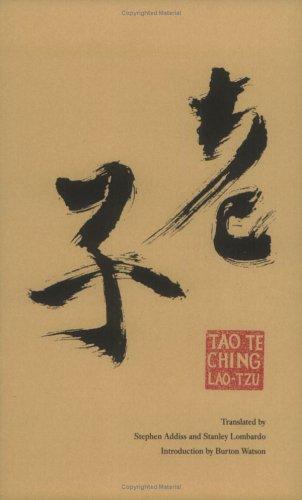
Tao Te Ching
Laozi (-500)
“Eighty-one verses that dismantle everything you think you know about power, language, and the meaning of a useful life.”
Language Register
Elevated but compressed — ancient Chinese literary register translated through vastly different English styles depending on translator
Syntax Profile
Extremely compressed — most verses are under 100 words. Paratactic syntax (clauses placed side by side without subordinating conjunctions) creates equivalence rather than hierarchy. Heavy use of parallelism and antithesis. The original Chinese is even more compressed than any translation can convey — classical Chinese omits subjects, articles, tense markers, and connectives that English requires.
Figurative Language
Moderate in frequency but extremely high in resonance — each metaphor (water, valley, infant, uncarved block, empty vessel, bending bow) recurs across multiple verses, accumulating meaning through repetition rather than elaboration. Laozi's images are drawn exclusively from nature and daily life, never from mythology or abstraction.
Era-Specific Language
The Way — ultimate reality, the source and pattern of all things, unnameable and inexhaustible
Virtue, power, or integrity — the Tao's manifestation in the individual
Non-action or effortless action — acting in harmony with natural flow rather than forcing outcomes
All phenomena in the created world — the Chinese equivalent of 'everything that exists'
The ideal person who embodies the Tao — not a deity but a human who has realized alignment with the Way
Original simplicity before culture, education, and desire shape and distort — the natural state
How Characters Speak — Class & Identity
The Sage
Speaks in paradox and understatement. Uses natural imagery rather than learned references. Avoids argument, persuasion, and display.
Wisdom expresses itself through simplicity, not sophistication. The sage's diction is deliberately unimpressive — authority without rhetoric.
Laozi (as author-voice)
Alternates between cosmic declaration and intimate question. Can sound like a mystic or a practical farmer in the same verse.
The text refuses to occupy a single social register. It speaks from everywhere and nowhere — which is, of course, the point.
Narrator's Voice
No narrator in the conventional sense — the text is a collection of sayings, observations, and instructions attributed to Laozi. The voice is oracular but not distant: it addresses the reader directly ('if you want to become whole'), asks questions ('do you have the patience to wait?'), and occasionally confesses uncertainty ('for lack of a better name'). The intimacy is paradoxical given the cosmic scope.
Tone Progression
Verses 1-22 (Tao Ching, Part 1)
Cosmological, paradoxical, meditative
Establishing the nature of the Tao through images and inversions. The voice is patient and expansive.
Verses 23-44 (Tao/Te Ching transition)
Observational, practical, increasingly political
Shifting from cosmic principles to human applications. The voice becomes more direct and advisory.
Verses 45-67 (Te Ching, Part 1)
Polemical, challenging, socially critical
Direct engagement with governance, education, and Confucian values. The voice sharpens into critique.
Verses 68-81 (Te Ching, Part 2)
Synthesizing, elegiac, quietly resolute
The arguments converge. Water returns. The text closes as it began — with words acknowledging their own limits.
Stylistic Comparisons
- Heraclitus — paradoxical fragments, fire vs. water, pre-Socratic contemporary with strikingly similar insights
- Marcus Aurelius's Meditations — aphoristic self-counsel, but Stoic where Laozi is Taoist, striving where Laozi yields
- The Book of Ecclesiastes — 'vanity of vanities,' futility of human effort, but within monotheistic framework
- Rumi — mystical paradox and the insufficiency of language, but ecstatic where Laozi is serene
Key Vocabulary from This Book
Notable words used in this text — click to see full definitions