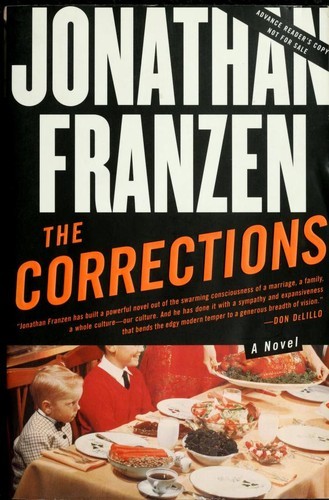
The Corrections
Jonathan Franzen (2001)
“A Midwestern family unravels across a continent, each member fleeing the same house and arriving at the same emptiness.”
Why This Book Matters
The Corrections revived the social novel as a form that could compete with postmodern experimentation for literary prestige. Published in September 2001 — days before 9/11 — it became the last great novel of the pre-terror American literary landscape, a comprehensive portrait of 1990s America that already intuited the instabilities about to erupt. It won the National Book Award, sold over three million copies, and established Franzen as the most prominent American novelist of his generation — a position cemented and contested by every subsequent book.
Firsts & Innovations
Demonstrated that the domestic family novel could achieve the scope and ambition of postmodern systems fiction
Pioneered the use of free indirect discourse rotating between family members as the primary structural device of a multi-protagonist novel
One of the first major literary novels to treat pharmaceutical capitalism and neurological disease as central themes rather than background detail
Cultural Impact
The Oprah controversy became a defining cultural moment in debates about literary elitism versus popular accessibility
Established the 'Franzen model' — the big social novel about an American family in crisis — that influenced a generation of literary fiction
Spawned a decade-long critical argument about whether the 'Great American Novel' could still be written, and whether Franzen had done it
Alfred Lambert's Parkinson's storyline brought degenerative neurological disease into literary fiction with unprecedented clinical specificity
The novel's treatment of Midwestern culture — neither nostalgic nor dismissive — complicated the coastal-elite caricature of American literary fiction
Banned & Challenged
Not widely banned, but frequently challenged in university syllabi for explicit sexual content (Denise's affairs, Chip's student relationship), graphic depictions of bodily deterioration, and perceived condescension toward Midwestern values — a criticism that misreads Franzen's ambivalence as contempt.