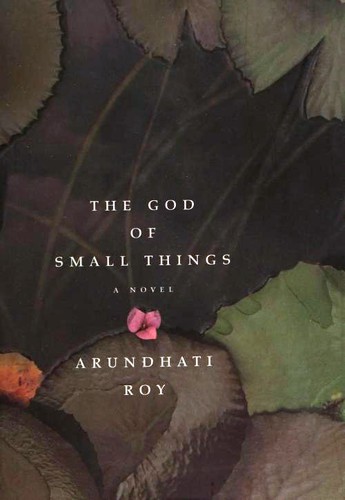
The God of Small Things
Arundhati Roy (1997)
“A family in Kerala is destroyed by the one law that matters most to the world around them: that some people are too small to be loved.”
At a Glance
In 1969 Kerala, India, twin siblings Rahel and Estha watch their family destroyed by caste, politics, and the arrival of their half-English cousin Sophie Mol. Their mother Ammu's forbidden love for Velutha, an Untouchable carpenter, ends in his murder by police and the twins' lifelong scarring. The novel is told in fragments, circling the one night everything broke — a night revealed fully only at the end.
Read full summary →Why This Book Matters
The God of Small Things became the fastest-selling debut novel in UK publishing history when it was released. It won the Booker Prize in 1997, making Roy the first Indian woman and one of the youngest authors to win. It introduced a generation of Western readers to postcolonial Indian fiction beyond the Rushdie-dominated mode, demonstrating that the political could be rendered through the intimate, the domestic, and the physical rather than through allegory and pyrotechnics. Its non-linear structure and its treatment of caste have made it a standard text in postcolonial studies, world literature, and feminist criticism.
Diction Profile
Formally literary with sustained childlike registers — Malayalam-inflected syntax, invented compound words, deliberate capitalization of concepts
Extremely high, but unusually physical