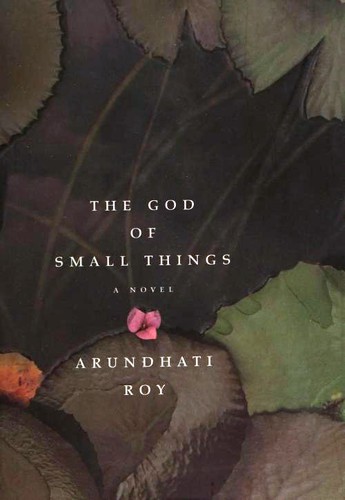
The God of Small Things
Arundhati Roy (1997)
“A family in Kerala is destroyed by the one law that matters most to the world around them: that some people are too small to be loved.”
For Students
Because it does things with language that most novels don't attempt — not for decoration but because the story requires it. The twins' compound-word grammar, the capitalized Laws, the non-linear structure that makes you hold multiple time periods simultaneously: these are not tricks but tools, and understanding how they work will change how you read everything else. Also: it is one of the most politically precise novels about caste, colonial legacy, and the cost of love ever written, and it is set in a India that most English-language curricula ignore.
For Teachers
The non-linear structure teaches narrative theory better than any textbook — students have to actively construct the chronology, which makes them attend to every structural choice Roy makes. The language registers offer three distinct close-reading approaches: the child's grammar, the political rhetoric, the lyrical love-chapters. The novel's engagement with caste, colonialism, and the Communist Party supports interdisciplinary work in history, political theory, and postcolonial studies. It pairs productively with Beloved, One Hundred Years of Solitude, and Midnight's Children.
Why It Still Matters
The Love Laws are not a Kerala phenomenon. Every society has rules about who may love whom — across class, race, religion, caste. The novel's central argument — that these laws exist, that they are enforced, and that they destroy people — is as applicable to any contemporary reader's world as it was to 1969 Kerala. The small things Roy names — attention, touch, the way someone builds something for you — are the things that make a life feel worth living. The novel argues that a civilization which destroys them for the sake of hierarchy is destroying its own best possibility.