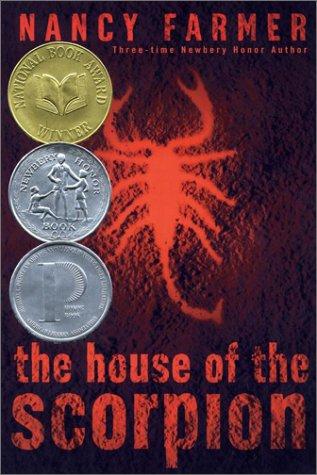
The House of the Scorpion
Nancy Farmer (2002)
“A boy discovers he is a clone — property, not a person — and must prove his humanity in a world that denies it.”
For Students
Because the question at the center of this novel — what makes someone a person? — is the question that matters most in an age of artificial intelligence, genetic engineering, and immigration debates. Matt's struggle to be recognized as human is not science fiction. It is the struggle of every person who has been told they don't belong, don't count, or don't deserve the same rights as everyone else. The novel is accessible enough to read in a weekend and complex enough to think about for years.
For Teachers
A rare novel that works for both middle school and high school, with enough political and ethical complexity to sustain rigorous analysis at either level. The accessible prose makes it ideal for reluctant readers, while the layered allegory (slavery, immigration, bioethics, totalitarianism) provides material for advanced discussion. Pairs exceptionally well with Never Let Me Go for AP classes, The Giver for middle school, and historical texts on slavery and immigration for interdisciplinary units.
Why It Still Matters
Every debate about who counts as a person — immigrants at the border, AI systems claiming consciousness, unborn children, prisoners stripped of rights — is a debate Matt would recognize. The novel's argument is not about cloning. It is about the human tendency to draw lines around personhood and place certain people outside them. That tendency is as old as civilization and as current as this morning's headlines.