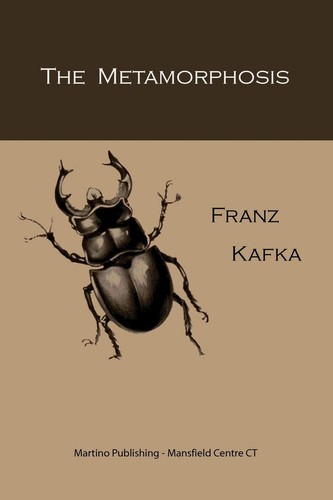
The Metamorphosis
Franz Kafka (1915)
“A man wakes up as a giant insect. His family's horror reveals a truth about being human that no realistic story could: we are only as human as the people around us choose to see us.”
This page prints on a single page. Use Ctrl+P / Cmd+P.
The Metamorphosis
Franz Kafka (1915) · 55pages · Modernist / Expressionist · 9 AP appearances
Summary
Gregor Samsa, a travelling salesman who supports his entire family, wakes one morning to find himself transformed into a giant insect. His family — parents and sister Grete — initially attempts to cope, but as weeks pass they grow resentful, neglectful, and finally hostile. Gregor, who can still think and feel but cannot communicate, gradually loses the will to live. When he overhears his family say he must go, he obliges by dying. The family, relieved, takes a day trip and begins planning their bright future.
Why It Matters
Published in 1915 in a German literary journal, then as a book by Kurt Wolff Verlag. Kafka lived to see it in print but not to see its significance recognized. After Brod's posthumous publication of Kafka's novels (The Trial, The Castle) in the 1920s, The Metamorphosis was retroactively recognize...
Themes & Motifs
Diction & Style
Register: Deliberately flat, precise, matter-of-fact — the language of reports and receipts applied to the impossible
Narrator: Third-person limited, rigidly focalized on Gregor — except the final paragraphs, when Gregor dies and the focalizatio...
Figurative Language: Low
Historical Context
Early 20th century — Habsburg Empire, industrial modernity, the bureaucratic state: The Habsburg bureaucratic culture provided both the novella's setting (the unnamed firm, the office manager, the debt) and its prose style. The early 20th century transformation of the European fam...
Key Characters
Talking Points
- Kafka never names what kind of insect Gregor becomes. Why? What is the effect of leaving it unspecified, and what does it tell us about how Kafka wants us to read the transformation?
- Gregor's first thoughts after discovering his transformation are about being late for his train. What does this tell us about the state he was in BEFORE the transformation?
- The novella is often read as an allegory for labor alienation — the worker reduced to a function, then discarded. What is the textual evidence for this reading? What does it leave unexplained?
- Grete begins the novella as Gregor's most devoted caretaker and ends as his executioner. Trace her transformation. Is she a villain by the end?
- The father's reinvigoration — his new job, his uniform he won't take off — happens in direct proportion to Gregor's degradation. What is Kafka arguing about the structure of family and patriarchal authority?
Notable Quotes
“As Gregor Samsa awoke one morning from uneasy dreams he found himself transformed in his bed into a gigantic insect.”
“What if I slept a little more and forgot all about this nonsense.”
“He did not know what had made him think of his father's apartment: it occurred to him that he was now no longer with his family, they had freed the...”
Why Read This
Because it is 55 pages and it will change how you read everything else. Kafka does in 55 pages what most novelists cannot do in 500: he makes you feel, at a cellular level, what it means to be invisible to the people who are supposed to love you. ...