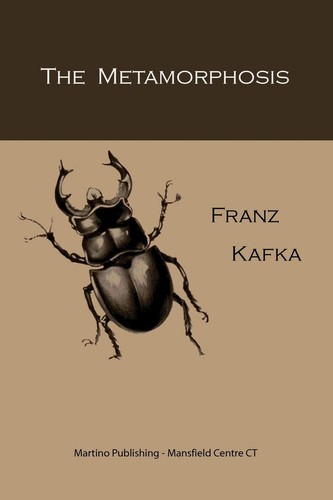
The Metamorphosis
Franz Kafka (1915)
“A man wakes up as a giant insect. His family's horror reveals a truth about being human that no realistic story could: we are only as human as the people around us choose to see us.”
The Metamorphosis— Summary & Analysis
by Franz Kafka · published 1915 · 55 pages · Modernist / Expressionist
A user-friendly study guide for The Metamorphosis by Franz Kafka (1915): a high-level plot summary, full chapter-by-chapter analysis, theme breakdowns, character profiles, and 30 essay questions designed for high-school, ap-english, college, ib readers. Unlike a stock summary, sumsumsum.com adds a diction analysis drawn from Franz Kafka’s actual text, the 9 documented AP Literature exam appearances of this book, and reading-difficulty guidance (Easy, 3/10) so students, teachers, and lifelong readers know what they are walking into.
“A man wakes up as a giant insect. His family's horror reveals a truth about being human that no realistic story could: we are only as human as the people around us choose to see us.”
Short Summary
Gregor Samsa, a travelling salesman who supports his entire family, wakes one morning to find himself transformed into a giant insect. His family — parents and sister Grete — initially attempts to cope, but as weeks pass they grow resentful, neglectful, and finally hostile. Gregor, who can still think and feel but cannot communicate, gradually loses the will to live. When he overhears his family say he must go, he obliges by dying. The family, relieved, takes a day trip and begins planning their bright future.
Detailed Summary
The novella opens mid-sentence, mid-transformation: 'As Gregor Samsa awoke one morning from uneasy dreams he found himself transformed in his bed into a gigantic insect.' No explanation is given. No cause is sought. Gregor's first thoughts are not about the horror of his condition but about his job ...
Summary in the Author’s Writing Style
A retelling of The Metamorphosis in Franz Kafka’s style — so you can hear the language, not just the plot. This is a stylistic pastiche written by sumsumsum, not an excerpt from the book.
When Gregor Samsa woke one morning from troubled sleep, he discovered that during the night he had been changed into an enormous vermin. He lay upon his armored back, and when he raised his head a little he could see the brown arch of his belly, divided into segments by stiff curving ridges, upon th…
Chapter-by-Chapter Analysis
If you liked The Metamorphosis, read next
Start with The Stranger by Albert Camus — Camus's Meursault is as alienated as Gregor and described in prose of similar flatness — but Meursault refuses meaning actively. Gregor never stops loving his family. The comparison reveals two responses to the absurd: revolt and consent.. Then try Waiting for Godot by Samuel Beckett — Beckett learned from Kafka: suspension without resolution, the comedy of suffering, the refusal to explain. Where Kafka gives Gregor a rich inner life, Beckett's characters barely have inner lives — both techniques create the same effect of grinding absurdity.. Or pivot to The Nose by Nikolai Gogol — Gogol's 1836 story of a man whose nose detaches and becomes a government official is the first great absurdist bureaucratic satire. Kafka read Gogol carefully. The Metamorphosis is the darker, more psychologically precise descendant..
For comparative essays, pair The Metamorphosis with
The strongest comparative pairing is Death of a Salesman (Arthur Miller) — Both Willy Loman and Gregor Samsa are breadwinners consumed and discarded by their role. Miller makes the social critique explicit; Kafka makes it structural. Read together, they show how realism and absurdism can arrive at the same indictment..
Each of these pairings opens a clean thesis path on shared themes, period diction, or formal influence — useful for AP Lit / IB / first-year college comparative essays.
More from Franz Kafka and the scholars who study Kafka
Other works by Franz Kafka: The Castle (1926, 316 pages), The Trial (1925, 255 pages). Reading two or three of these in sequence reveals Franz Kafka’s recurring obsessions and stylistic signatures more clearly than any single book can.
The standard scholarly entry points to Franz Kafka’s work: Reiner Stach (German Kafka biographer, three volumes) — Kafka: The Decisive Years / The Years of Insight / The Early Years (2005, 2008, 2017); Walter H. Sokel (University of Virginia, Commonwealth Professor) — The Myth of Power and the Self (2002). These are the works graduate seminars cite when teaching Franz Kafka.