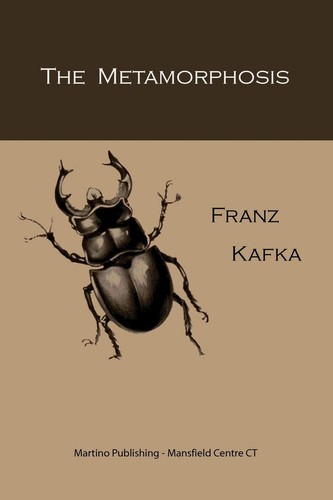
The Metamorphosis
Franz Kafka (1915)
“A man wakes up as a giant insect. His family's horror reveals a truth about being human that no realistic story could: we are only as human as the people around us choose to see us.”
Why This Book Matters
Published in 1915 in a German literary journal, then as a book by Kurt Wolff Verlag. Kafka lived to see it in print but not to see its significance recognized. After Brod's posthumous publication of Kafka's novels (The Trial, The Castle) in the 1920s, The Metamorphosis was retroactively recognized as the key to Kafka's entire project. It is now the most widely taught German-language literary text in the world and has given the English language an adjective: 'Kafkaesque.'
Firsts & Innovations
Established the template for literary absurdism: the fantastic premise treated as banal, never explained
One of the first works to embed bureaucratic language as a literary style — form as argument
Pioneered the focalized-limited third-person narration transferred at death — a technique later used by Faulkner and Woolf
Cultural Impact
The word 'Kafkaesque' entered English — meaning: a nightmarish, bureaucratic situation that is simultaneously absurd and inescapable
Inspired a generation of absurdist and existentialist writers: Camus, Beckett, Borges, Ionesco, and Heller all cite Kafka
The Metamorphosis is among the three most assigned texts in college comparative literature courses worldwide
Vladimir Nabokov famously lectured that Gregor was not a cockroach but a winged beetle — the wings are mentioned once, in Part II, and he never uses them
Dozens of theatrical, operatic, and film adaptations; most struggle because the novella's power is inseparable from Kafka's prose register
The novella's central image — the worker who becomes vermin in his own home — became shorthand for labor alienation in Marxist literary criticism
Banned & Challenged
Banned and burned by the Nazis as 'degenerate literature' (entartete Kunst) because Kafka was Jewish. Also suppressed in the Soviet Union for much of the 20th century — Soviet literary doctrine required fiction to affirm labor and the collective; Kafka's worker becomes vermin, and his family is relieved. The ban was lifted only after Stalin's death.