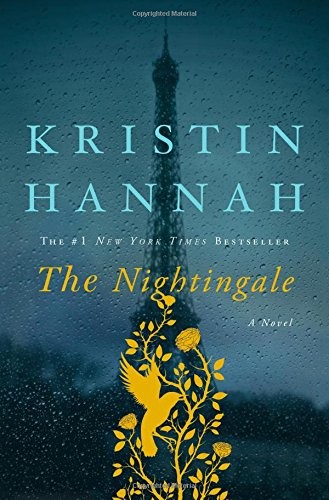
The Nightingale
Kristin Hannah (2015)
“Two sisters in Nazi-occupied France make impossible choices — and one of them will disappear from history entirely.”
This page prints on a single page. Use Ctrl+P / Cmd+P.
The Nightingale
Kristin Hannah (2015) · 440pages · Contemporary / Historical Fiction
Summary
Vianne and Isabelle Rossignol are sisters living in occupied France during World War II. Vianne, the older sister, struggles to protect her daughter while sheltering Jewish children from Nazi deportation. Isabelle, reckless and idealistic, becomes a courier for the French Resistance under the code name 'the Nightingale,' guiding downed Allied airmen over the Pyrenees. Both sisters are captured. Isabelle dies of illness in Ravensbrück concentration camp. Vianne survives, and the novel reveals in its frame narrative that she — now elderly, living in America — is the unnamed 'old woman' narrating the entire story.
Why It Matters
The Nightingale became the best-selling novel of 2015 in the United States and remained on bestseller lists for over a year. It revived mainstream interest in women's roles in the French Resistance and introduced the Comet Line to millions of readers who had never encountered it in history class....
Themes & Motifs
Diction & Style
Register: Conversational with lyrical moments — clear, direct prose with periodic emotional amplification
Narrator: Dual third-person close POV, alternating between Vianne and Isabelle. The frame sections use first person (unnamed, l...
Figurative Language: Moderate
Historical Context
Nazi-occupied France, 1939–1945: Hannah's historical premise requires confronting French complicity in the Holocaust — the Vichy government collaborated actively in deporting Jews, using French police, French bureaucracy, and Fren...
Key Characters
Talking Points
- The novel uses a dual POV structure, alternating between Vianne and Isabelle. Whose story is more important to tell — the dramatic resistance operative's or the quiet hidden resister's? What would we lose if the novel focused only on Isabelle?
- Hannah opens the novel in 1995 with an unnamed old woman, withholding her identity until the end. What does this structural choice do for the reader? How does knowing she is Vianne — not Isabelle — change your understanding of the whole story?
- Captain Beck is courteous, shares rations, and warns Vianne before searches. Is he a good person? Does his decency excuse his role in the occupation? Can you be a decent person inside a criminal system?
- 'In love we find out who we want to be; in war we find out who we are.' Does the novel prove this claim? Are there moments where war reveals something unexpected — even positive — about a character?
- Vianne's form of resistance — hiding children, forging papers — is invisible and deniable. Isabelle's is dramatic and visible. Which requires more courage? Does the novel take a position, or does it deliberately withhold judgment?
Notable Quotes
“In love we find out who we want to be; in war we find out who we are.”
“I survived by forgetting.”
“Wars don't just turn men into soldiers. They turn women into something too. I just don't know what yet.”
Why Read This
Because this is the WWII novel that actually tells you what the women were doing — and they were doing everything. You'll learn about the Comet Line, the Rafle du Vél' d'Hiv, Ravensbrück, and the French Resistance through specific people you care ...