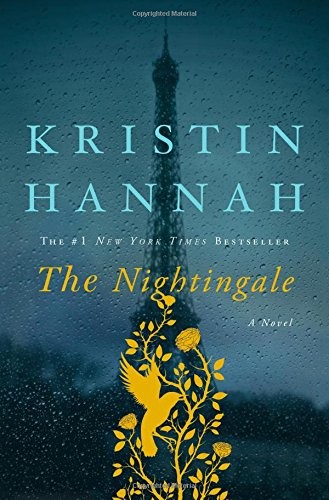
The Nightingale
Kristin Hannah (2015)
“Two sisters in Nazi-occupied France make impossible choices — and one of them will disappear from history entirely.”
For Students
Because this is the WWII novel that actually tells you what the women were doing — and they were doing everything. You'll learn about the Comet Line, the Rafle du Vél' d'Hiv, Ravensbrück, and the French Resistance through specific people you care about. It reads fast, hits hard, and earns every emotion it asks for. The dual POV structure also makes it easy to see how two people can respond to the same crisis in completely different ways — and how both responses can be forms of courage.
For Teachers
The dual-POV structure is excellent for comparative character analysis at the high school level — students can track how the same events look different through Vianne's cautious eyes versus Isabelle's urgent ones. The frame narrative introduces unreliable/limited narration without the difficulty of modernist prose. The historical content connects to genocide studies, women's history, and resistance ethics. Thematically accessible, historically rich, and written at a level that doesn't exclude struggling readers.
Why It Still Matters
The novel's core question is still entirely live: what do you do when the government that is supposed to protect you is actively harming people? Do you accommodate, negotiate, and survive? Do you resist openly and risk everything? Do you do the quiet, invisible, deniable work of hiding one child at a time? Most of us will never face the specific choice Vianne and Isabelle faced. But the structure of the moral dilemma — safety vs. conscience, survival vs. complicity — is everywhere. The Nightingale won't tell you the right answer. It will make you feel the weight of each one.