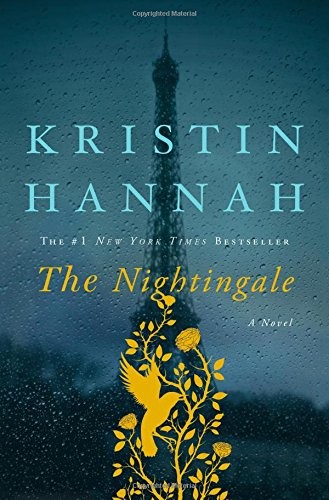
The Nightingale
Kristin Hannah (2015)
“Two sisters in Nazi-occupied France make impossible choices — and one of them will disappear from history entirely.”
The Nightingale— Historical Context & Author Background
Author: Kristin Hannah · Published 2015· Era: Contemporary / Historical Fiction·440 pages
Themes explored: war, courage, sacrifice, family, sisterhood, resistance, survival, love
About Kristin Hannah
Kristin Hannah (born 1960) is an American novelist who worked as an advertising attorney before becoming a full-time writer. She has published more than twenty novels, almost all of them domestic-emotional dramas centering on women's relationships. The Nightingale was her first deep historical research project — she spent years researching the French Resistance, the Comet Line escape network, and the Ravensbrück concentration camp. The novel was dedicated to her mother, who died of cancer, and to 'the women who were never given the right words.' It sold over four million copies in its first year and has been optioned multiple times for film, with a production finally released in 2023.
Life → Text Connections
How Kristin Hannah's real experiences shaped specific elements of The Nightingale.
Hannah lost her mother and has written extensively about the mother-daughter bond in other novels
Vianne and Isabelle's bond, shaped by the loss of their mother — the wound that divided them and ultimately reunited them
The sisters' emotional estrangement traces directly back to maternal loss and paternal failure. Grief is the source of their opposing survival strategies.
Hannah's legal career trained her in research, evidence, and close reading of documents
The novel's operational specificity — how Resistance networks actually worked, how identity documents were forged, which mountain passes were used
The Nightingale feels credible because Hannah did the research a novelist without legal training might have shortcut. The details earn the emotional argument.
Hannah has repeatedly described The Nightingale as a response to her belief that women's wartime contributions were underrecorded
The frame narrative's central act — Vianne finally publicly naming Isabelle's deeds — and the novel's insistence on women as active Resistance agents
The novel has an explicit advocacy argument: women's history has been told incompletely. The book is a correction.
Historical Era
Nazi-occupied France, 1939–1945
How the Era Shapes the Book
Hannah's historical premise requires confronting French complicity in the Holocaust — the Vichy government collaborated actively in deporting Jews, using French police, French bureaucracy, and French trains. The novel holds this tension without resolving it into simple German-villain/French-hero binaries. Captain Beck is a German soldier with decency; there are also French collaborators who betray Resistance members. The occupation was a moral crisis for everyone, and Hannah respects that complexity while still maintaining clear ethical orientation.
Why The Nightingale Matters Historically
The Nightingale became the best-selling novel of 2015 in the United States and remained on bestseller lists for over a year. It revived mainstream interest in women's roles in the French Resistance and introduced the Comet Line to millions of readers who had never encountered it in history class. Historians of women's wartime contributions credit it with raising popular awareness of a significantly underresearched area.
- One of the first commercially successful novels to center the Comet Line escape network as its narrative spine
- One of very few WWII novels told entirely from women's perspectives without a male character driving the plot
- Demonstrated that 'women's fiction' about WWII could reach readers across gender lines in the same scale as conventional war narratives
The Nightingale has faced some school library challenges related to the rape scene and wartime violence, but it has not been widely banned. Its presence on school reading lists has generally been welcomed rather than contested — the Holocaust content is considered historically necessary rather than gratuitous.