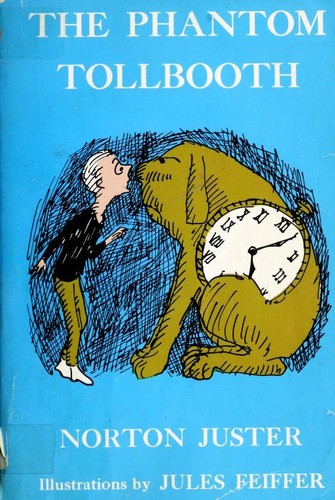
The Phantom Tollbooth
Norton Juster (1961)
“A boy who finds everything boring receives a magical tollbooth — and discovers that words, numbers, and ideas are the most extraordinary adventures of all.”
Similar Books
Thematic connections across eras and genres — books that talk to each other.
Alice's Adventures in Wonderland
Lewis Carroll
The direct ancestor — a child in an allegorical world where language behaves unexpectedly, rules are arbitrary, and authority figures are absurd. Carroll is stranger and darker; Juster is warmer and more pedagogically optimistic.
A Wrinkle in Time
Madeleine L'Engle
Published the same year, 1962, also an educational fantasy that takes science and language seriously as adventure materials. Both are classics of the same mid-century moment.
The Little Prince
Antoine de Saint-Exupéry
Another allegory about what adults have forgotten and children instinctively know — but The Little Prince is elegiac and melancholy where The Phantom Tollbooth is joyful and comic
Flatland
Edwin Abbott Abbott
Mathematical allegory as accessible fiction — Abbott's two-dimensional world teaches geometry through satire, Juster's Lands Beyond teach linguistics through puns. Both treat intellectual concepts as worthy adventure material.
The Hitchhiker's Guide to the Galaxy
Douglas Adams
Adult heir to Juster's tradition — absurdist fantasy where wordplay, philosophical gags, and sudden genuine wisdom coexist. Adams wrote for adults what Juster wrote for children.
Charlie and the Chocolate Factory
Roald Dahl
Published three years later, also a child's journey through an allegorical world with comic rules and moral lessons. Dahl is darker and more punitive; Juster is gentler and more generous.