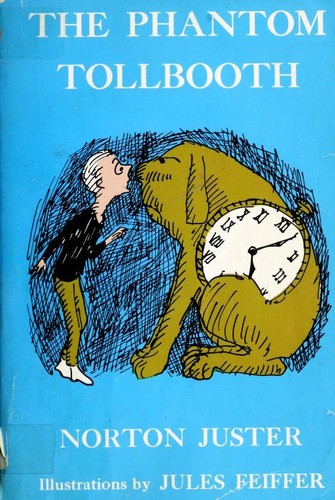
The Phantom Tollbooth
Norton Juster (1961)
“A boy who finds everything boring receives a magical tollbooth — and discovers that words, numbers, and ideas are the most extraordinary adventures of all.”
The Phantom Tollbooth— Summary & Analysis
by Norton Juster · published 1961 · 256 pages · Contemporary / Mid-Century Children's Literature
A user-friendly study guide for The Phantom Tollbooth by Norton Juster (1961): a high-level plot summary, full chapter-by-chapter analysis, theme breakdowns, character profiles, and 30 essay questions designed for middle-school readers. Unlike a stock summary, sumsumsum.com adds a diction analysis drawn from Norton Juster’s actual text, and reading-difficulty guidance (Easy, 1/10) so students, teachers, and lifelong readers know what they are walking into.
“A boy who finds everything boring receives a magical tollbooth — and discovers that words, numbers, and ideas are the most extraordinary adventures of all.”
Short Summary
Milo, a bored boy who finds no purpose in anything, returns home one day to find a mysterious toy tollbooth in his room. He drives through it in his toy car and enters the Lands Beyond, where he journeys through Dictionopolis (ruled by King Azaz) and Digitopolis (ruled by the Mathemagician), rescues the exiled Princesses Rhyme and Reason from the Castle in the Air, and returns home having learned to find wonder in the ordinary world.
Detailed Summary
Milo is a boy who is bored by everything. School bores him, the trip to and from school bores him, and when he's not in school, he can't think of anything to do. He simply finds no point to anything. One afternoon, Milo comes home to find an enormous package in his room. Inside is a toy tollbooth, ...
Summary in the Author’s Writing Style
A retelling of The Phantom Tollbooth in Norton Juster’s style — so you can hear the language, not just the plot. This is a stylistic pastiche written by sumsumsum, not an excerpt from the book.
There was once a boy named Milo who didn't know what to do with himself — not just sometimes, but always. When he was in school he longed to be out, and when he was out he longed to be in. On the way he thought about coming back, and coming back he thought about going, and wherever he happened to be…
Chapter-by-Chapter Analysis
If you liked The Phantom Tollbooth, read next
Start with Alice's Adventures in Wonderland by Lewis Carroll — The direct ancestor — a child in an allegorical world where language behaves unexpectedly, rules are arbitrary, and authority figures are absurd. Carroll is stranger and darker; Juster is warmer and more pedagogically optimistic.. Then try A Wrinkle in Time by Madeleine L'Engle — Published the same year, 1962, also an educational fantasy that takes science and language seriously as adventure materials. Both are classics of the same mid-century moment.. Or pivot to The Little Prince by Antoine de Saint-Exupéry — Another allegory about what adults have forgotten and children instinctively know — but The Little Prince is elegiac and melancholy where The Phantom Tollbooth is joyful and comic.
For comparative essays, pair The Phantom Tollbooth with
The strongest comparative pairing is The Hitchhiker's Guide to the Galaxy (Douglas Adams) — Adult heir to Juster's tradition — absurdist fantasy where wordplay, philosophical gags, and sudden genuine wisdom coexist. Adams wrote for adults what Juster wrote for children..
Each of these pairings opens a clean thesis path on shared themes, period diction, or formal influence — useful for AP Lit / IB / first-year college comparative essays.