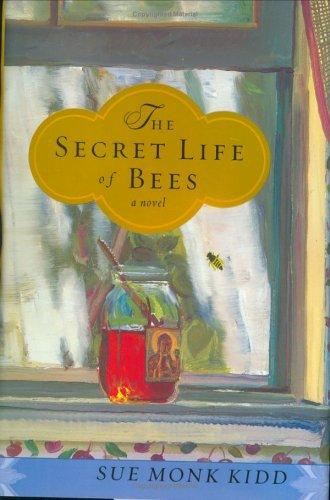
The Secret Life of Bees
Sue Monk Kidd (2002)
“A fourteen-year-old girl fleeing a lie about her mother finds what she was actually looking for: a family she chose and a faith she built herself.”
The Secret Life of Bees— Historical Context & Author Background
Author: Sue Monk Kidd · Published 2002· Era: Contemporary / American South·302 pages
Themes explored: race, family, motherhood, love, forgiveness, religion, coming-of-age, belonging
About Sue Monk Kidd
Sue Monk Kidd (born 1948) grew up in Sylvester, Georgia — the South of the novel is autobiographical in texture if not in event. She worked as a nurse and then turned to writing, first nonfiction spiritual memoir (The Dance of the Dissident Daughter) and then fiction. The Secret Life of Bees was her debut novel, published in 2002 when she was in her fifties. It became a phenomenon: a million copies sold in its first year, a decade on the bestseller list, a 2008 film adaptation. Kidd has spoken about her experience with a mystical feminine spirituality that developed during a crisis of faith — a journey directly reflected in Lily's arc.
Life → Text Connections
How Sue Monk Kidd's real experiences shaped specific elements of The Secret Life of Bees.
Kidd grew up in the segregated South and has written about the racism she witnessed and absorbed as a white Southern woman
The Civil Rights setting is not historical research but cultural memory — the novel's period accuracy comes from lived proximity
The novel's treatment of race has both the intimacy of lived experience and the blind spots of the white gaze; both are present and worth discussing
Kidd underwent a spiritual crisis in the late 1980s and developed a feminist theology centered on the divine feminine
August's Black Madonna theology, the Daughters of Mary, and Our Lady of Chains are Kidd's spiritual autobiography rendered as fiction
The novel is not neutral about religion — it is advocating for a specific kind of embodied, woman-centered spiritual practice that emerged from Kidd's own journey
Kidd's The Dance of the Dissident Daughter (1996) is a memoir about leaving patriarchal Christianity for feminist spirituality
Lily's movement from a vague, punishing Christianity toward the Boatwrights' embodied Madonna practice mirrors Kidd's own trajectory exactly
The novel's spiritual arc is autobiographical in structure; knowing this deepens both the fiction and the memoir
Historical Era
Summer 1964, South Carolina — Civil Rights Act passage, Jim Crow South
How the Era Shapes the Book
The Civil Rights Act passing is not background — it is the direct trigger for Rosaleen's arrest and the novel's central plot. Kidd situates every element of racial tension in specific historical reality: Zach's arrest is possible because the law means nothing without enforcement; August's wealth and independence exist in constant tension with a society designed to prevent both. The summer of 1964 is chosen deliberately — the moment of legal change that did not produce immediate material change.
Why The Secret Life of Bees Matters Historically
The Secret Life of Bees arrived in 2002 and sold over six million copies in the United States alone. It became one of the most widely taught novels in American middle and high schools — a book clubs staple and a reading list perennial. Its treatment of race has been praised for its emotional warmth and criticized for centering a white narrator on Black women's lives; both responses are legitimate and both reflect its cultural moment. The 2008 film adaptation brought it to an even wider audience.
- One of the first mainstream American novels to center a syncretic, woman-led spiritual community as the site of healing rather than a conventionally Christian one
- Among the first post-Civil Rights-era novels taught widely in middle schools that treats the period from inside the daily reality rather than at protest-march distance
- Sue Monk Kidd's debut novel — unusual for a writer in her fifties, unusual for a book about a fourteen-year-old to be written with such precise interior access
Regularly challenged in schools for profanity, sexual content (Lily's coming-of-age including attraction to Zach), racial violence, and 'offensive language' referring to its frank depiction of period-accurate racism. Some challenges have objected to its 'new age' or syncretic spirituality as not in line with Christian values.