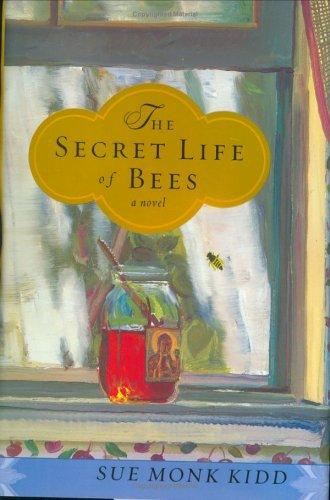
The Secret Life of Bees
Sue Monk Kidd (2002)
“A fourteen-year-old girl fleeing a lie about her mother finds what she was actually looking for: a family she chose and a faith she built herself.”
Essay Questions & Food for Thought
30questions designed to challenge assumptions and provoke original thinking. These can't be answered from a summary — you need the actual text.
Lily carries guilt about her mother's death for the entire novel. How does Kidd use this false guilt to drive the plot, and what does its resolution tell us about how children absorb adult failures?
August waits to tell Lily the truth about her mother for most of the novel. Is she right to wait? What is the difference between lying by omission and waiting for someone to be ready?
June Boatwright is hostile to Lily from the start. Is she wrong? What is June's perspective, and why does Kidd include a character who refuses to simply welcome the white protagonist?
The Civil Rights Act passes on page one, and Rosaleen is beaten on page ten. What is Kidd saying about the gap between legal rights and lived reality?
May Boatwright feels the world's pain as her own. Is this empathy presented as a gift, a curse, or both? What does the novel suggest is the right relationship to the suffering of others?
Zach tells Lily: 'You gotta imagine what's never been.' How does this apply to his situation in 1964? How does it apply to Lily's? Are they imagining the same things?
The novel is set in 1964 and told by a white narrator who encounters Black women's lives. What is gained and lost by this choice? What can Lily see that a Black narrator might not center, and vice versa?
August teaches Lily about bees throughout the novel. Choose one beekeeping lesson and explain how it functions as life advice. Is the metaphor too easy, or does Kidd earn it?
Our Lady of Chains is a Black Madonna figure — a divine mother made from the suffering of the enslaved. How does this theology differ from mainstream American Christianity? Why does it appeal to Lily?
Rosaleen is one of the novel's most important characters but one of the least interiority-rich. We see her from Lily's perspective only. What do we not know about Rosaleen that we probably should?
Deborah Owens left Lily. This is the central fact the novel builds toward. Is Lily's eventual forgiveness of her mother earned? Can you forgive someone who left?
T. Ray told Lily she killed her mother. By the end of the novel, Lily doesn't hate him. Should she? What is Kidd saying about anger and forgiveness?
The novel ends with Lily surrounded by eight mothers who 'claimed' her. What does this ending say about the definition of family? Is it too tidy, or does Kidd earn it?
Kidd is white and her protagonist is white, but the moral center of the novel is a Black woman, August. What are the risks and responsibilities of this narrative choice?
The novel is set in summer 1964, during the Civil Rights Movement, but its primary plot is about a white girl's grief and coming-of-age. Should it be? Is the historical setting used or exploited?
May's wailing wall is based on the Western Wall in Jerusalem. Why does Kidd make this connection? What does it add to May's grief practice?
Compare August Boatwright to Atticus Finch in To Kill a Mockingbird. Both are moral centers of novels about young narrators in the Civil Rights South. How are they similar, and how does their difference reveal each novel's argument?
The bees in Lily's bedroom appear as an omen that something is about to change. Does the novel use magical realism, or is Kidd only using the natural world metaphorically? Where is the line?
Kidd wrote this novel in her fifties, drawing on a spiritual crisis she had in the 1980s. How does knowing the novel is partly autobiographical — a white woman's spiritual journey — change your reading of August's theology?
Lily lies constantly in the early novel — to August about who she is, to Rosaleen about their plans, to herself about her guilt. How does her relationship to honesty change by the novel's end?
Zach says he wants to be a lawyer. Lily says she wants to be a writer. In 1964, what do these ambitions cost each of them? Who is dreaming more dangerously?
The Boatwright house is painted pink because August says it's the color of joy. What does it mean to perform joy as a deliberate act? Is this denial of hardship, or something else?
The novel is told entirely from Lily's point of view. August clearly knows more than Lily throughout. What would the novel look like from August's perspective? What would change?
May drowns herself with stones in her pockets — an echo of Virginia Woolf's 1941 suicide. Is this allusion intentional? What does connecting May's death to Woolf's add to the novel's treatment of women and unbearable feeling?
At the end, T. Ray leaves Lily at the Boatwright house without a real fight. Is this realistic? Does T. Ray deserve more complexity than the novel gives him?
Compare The Secret Life of Bees to Toni Morrison's Beloved. Both center Black maternal figures and the aftermath of American racial violence. What can each novel do that the other can't?
August says: 'You have to find a mother inside yourself.' What does this mean? Is she saying Lily doesn't need August — that she should be self-sufficient? Or something else?
The novel covers one summer. What would be different if Kidd had set it over a year, or five years? Why is the compressed timeline important?
Lily ends the novel as part of a community, not as a romantic partner to anyone. Is this a feminist ending, a realistic one, or both? What would change if the novel ended with Lily and Zach together?
This novel has been challenged in schools for its depiction of period racism, its religious syncretism, and its frank treatment of adolescent sexuality. Considering what it is actually about, do you think the challenges are to the content or to something more uncomfortable?