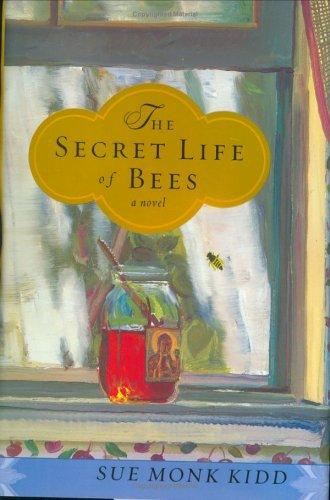
The Secret Life of Bees
Sue Monk Kidd (2002)
“A fourteen-year-old girl fleeing a lie about her mother finds what she was actually looking for: a family she chose and a faith she built herself.”
The Secret Life of Bees— Summary & Analysis
by Sue Monk Kidd · published 2002 · 302 pages · Contemporary / American South
A user-friendly study guide for The Secret Life of Bees by Sue Monk Kidd (2002): a high-level plot summary, full chapter-by-chapter analysis, theme breakdowns, character profiles, and 30 essay questions designed for middle-school, high-school, ap-english readers. Unlike a stock summary, sumsumsum.com adds a diction analysis drawn from Sue Monk Kidd’s actual text, the 4 documented AP Literature exam appearances of this book, and reading-difficulty guidance (Easy, 1/10) so students, teachers, and lifelong readers know what they are walking into.
“A fourteen-year-old girl fleeing a lie about her mother finds what she was actually looking for: a family she chose and a faith she built herself.”
Short Summary
It's 1964 in South Carolina. Fourteen-year-old Lily Owens carries a crushing secret: she believes she accidentally shot and killed her own mother when she was four. Running from her abusive father T. Ray with her nanny Rosaleen, Lily follows clues left by her dead mother to a beekeeping community run by three Black sisters — August, June, and May Boatwright. She finds refuge, love, and ultimately the truth about her mother, which is both more complicated and more forgiving than she imagined.
Detailed Summary
In Sylvan, South Carolina, in the summer of 1964, fourteen-year-old Lily Owens lives with her cold and often cruel father T. Ray on a peach farm. Her mother Deborah died when Lily was four, and Lily carries a terrible memory: she picked up a gun during her parents' fight, it went off, and her mother...
Summary in the Author’s Writing Style
A retelling of The Secret Life of Bees in Sue Monk Kidd’s style — so you can hear the language, not just the plot. This is a stylistic pastiche written by sumsumsum, not an excerpt from the book.
That summer the heat came down on Sylvan like a hand pressing the whole town flat, and I lived under it the way you live with a stone in your shoe — knowing all day it was there. I was fourteen and I carried a thing heavier than weather. When I was four my mother died with a gun between us, and I ha…
Chapter-by-Chapter Analysis
If you liked The Secret Life of Bees, read next
Start with Beloved by Toni Morrison — Both center Black maternal figures, motherhood under impossible conditions, and the spiritual life of Black women in American history — but Morrison writes from inside the experience where Kidd writes from without. Then try Their Eyes Were Watching God by Zora Neale Hurston — A Black woman's search for selfhood in the South — the novel Kidd's reads alongside, not instead of; Hurston gives the interiority that Kidd can only gesture toward. Or pivot to The Great Gatsby by F. Scott Fitzgerald — Both novels use a first-person narrator arriving in a new world, learning its rules, and being transformed by one extraordinary person — though Kidd's transformation is toward belonging where Gatsby's is toward disillusionment.
For comparative essays, pair The Secret Life of Bees with
The strongest comparative pairing is To Kill a Mockingbird (Harper Lee) — Southern first-person child narrator, race and justice, white protagonist in a story shaped by Black lives — the comparison reveals how each novel distributes moral authority. Another productive pairing is The Color Purple (Alice Walker) — Female community as salvation, the divine feminine, Southern setting, survival through sisterhood — Walker's epistolary structure shares Kidd's conviction that women's relationships are the real story. For a third angle, contrast with A Raisin in the Sun (Lorraine Hansberry) — Same historical moment, different vantage point — Hansberry shows what 1964 America looked like from inside the Black experience Kidd's novel approaches from the outside.
Each of these pairings opens a clean thesis path on shared themes, period diction, or formal influence — useful for AP Lit / IB / first-year college comparative essays.