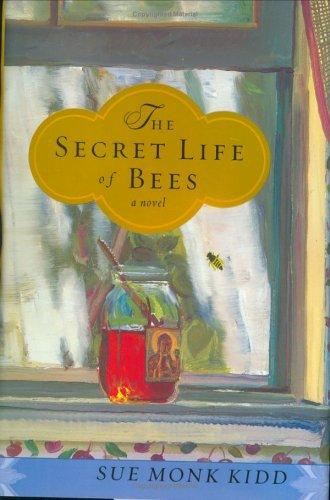
The Secret Life of Bees
Sue Monk Kidd (2002)
“A fourteen-year-old girl fleeing a lie about her mother finds what she was actually looking for: a family she chose and a faith she built herself.”
For Students
Because it takes a fourteen-year-old girl seriously. Lily is not a foil for adult drama — she is the drama. Her grief, her guilt, her search for belonging are treated as real and important, and the novel's conclusion is that she deserves a real answer to those needs. It is also one of the most teachable novels in American fiction: accessible language, clear plot, dense with symbol, grounded in a pivotal historical moment.
For Teachers
Every theme is visible on the surface and deeper below: race, motherhood, community, faith, forgiveness. The beekeeping symbolism is a built-in close-reading framework that never feels forced. The 1964 setting connects to history in ways that reward research. And the characters are differentiated enough — August, June, May, Rosaleen, Zach — to support character studies, comparative essays, and individual response papers. The novel teaches differently at different grade levels, which is what makes it a perennial.
Why It Still Matters
The question at the center of the novel — what do you do when the mother you needed didn't exist? — is universal without being abstract. Families are imperfect. Parents fail children. The question of whether you can build what wasn't given to you is one every reader has lived. The Boatwright house is Kidd's answer: yes, but not alone.