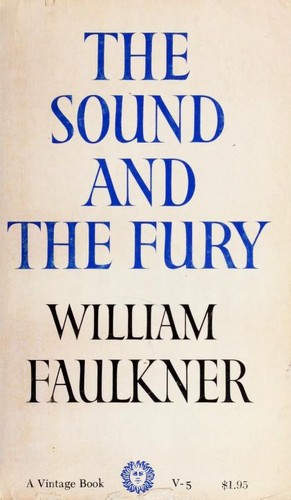
The Sound and the Fury
William Faulkner (1929)
“Four voices. Four narrators. One family destroying itself in real time — and Faulkner gives the first chapter to the one who cannot understand what he's telling you.”
At a Glance
The Compson family of Jefferson, Mississippi collapses over three days in April 1928, told through four radically different narrators: Benjy (intellectually disabled, no sense of time), Quentin (suicidal Harvard student in 1910), Jason (bitter, mercenary, the functional 'normal' brother), and Dilsey (the Black servant who holds what's left together). The novel's subject is the decay of the Old South through one aristocratic family — their loss of land, money, honor, and sanity — and the gap between how each mind constructs the same catastrophe.
Read full summary →Why This Book Matters
The Sound and the Fury is the novel Faulkner himself called his best — his most ambitious, his most agonized, and his least commercial. It was passed over by readers for years, understood only by a small audience, and then rescued by academic criticism in the 1940s and 50s. It is now recognized as one of the two or three most formally innovative novels in American literature — the experiment that proved stream of consciousness could work in American prose as it had for Joyce in Irish prose.
Diction Profile
Each section has its own register. Benjy: paratactic, sensory, no hierarchy. Quentin: literary, fragmented, increasingly unpunctuated. Jason: colloquial, comic, declarative. Dilsey: formal third person with vernacular dialect in dialogue and sermon.
Extremely high in Benjy and Quentin; lower (by design) in Jason and Dilsey. The tree-climbing scene (Caddy and the muddy drawers), the branch scenes, the watch, the Confederate monument