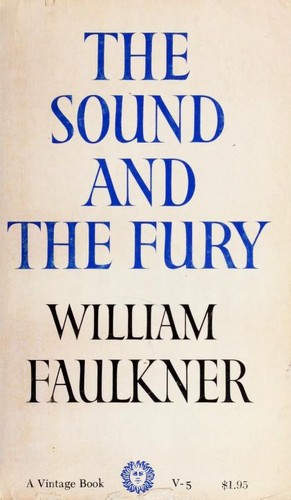
The Sound and the Fury
William Faulkner (1929)
“Four voices. Four narrators. One family destroying itself in real time — and Faulkner gives the first chapter to the one who cannot understand what he's telling you.”
Similar Books
Thematic connections across eras and genres — books that talk to each other.
As I Lay Dying
William Faulkner
Written immediately after — same multiple-narrator structure, same Yoknapatawpha County, darker comedy and even more extreme formal experiment
Ulysses
James Joyce
The direct predecessor — Faulkner absorbed Joyce's stream-of-consciousness innovations and pushed them further into the American vernacular
Beloved
Toni Morrison
Morrison's formal debt to Faulkner is explicit — shattered chronology, multiple perspectives, the past as permanent present, trauma that cannot be processed linearly
Light in August
William Faulkner
Same Yoknapatawpha territory — Faulkner's treatment of race becomes more central and more violent, Joe Christmas as the outsider the South destroys
Absalom, Absalom!
William Faulkner
Quentin Compson reappears as narrator — the unfinished business of The Sound and the Fury is taken up and expanded into the full history of Southern self-destruction
The Great Gatsby
F. Scott Fitzgerald
Published four years earlier — same modernist moment, opposite formal approach. Where Fitzgerald controls his beauty, Faulkner lets his narrative collapse under the weight of what it contains.