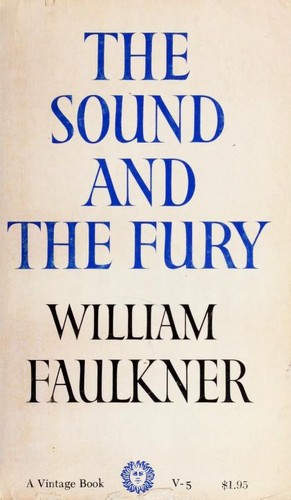
The Sound and the Fury
William Faulkner (1929)
“Four voices. Four narrators. One family destroying itself in real time — and Faulkner gives the first chapter to the one who cannot understand what he's telling you.”
For Students
Because nothing else teaches you what language can actually do. Most novels tell you what happened. The Sound and the Fury shows you how minds experience what happened — and those minds are unreliable, self-interested, and grieving in ways they cannot articulate. Every close-reading skill you'll use for the rest of your life gets stress-tested here. Start with Benjy: if you can follow Benjy, you can follow anything.
For Teachers
The most teachable difficult novel in American literature, because the difficulty is the lesson. Faulkner's formal choices — what does it mean to have an unreliable narrator? what does it mean when a narrator can't lie? what does syntax perform? — are not arbitrary; each one is arguing something about consciousness, class, and grief. The novel can be taught in as many different units as it has sections.
Why It Still Matters
Every family has a Benjy — someone whose grief is real but whose voice isn't trusted. Every family has a Quentin — someone whose idealism destroyed them. Every family has a Jason — someone who stayed, resented it, and took payment where they could. And every family has a Dilsey — someone who witnessed everything and endured. The Compsons are extreme. The family dynamic is not.