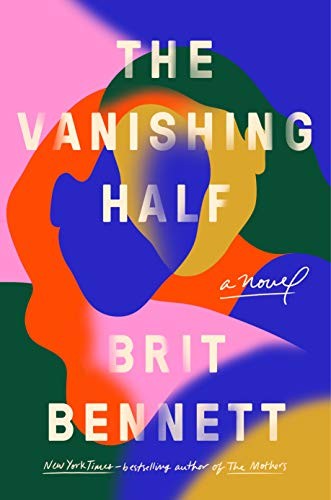
The Vanishing Half
Brit Bennett (2020)
“Twin sisters flee a Black town that polices their Blackness — one vanishes into white America, and the next generation inherits choices they never got to make.”
Characters in The Vanishing Half
by Brit Bennett · 2020 · 7 characters analyzed
Cast: Stella Vignes (later Stella Sanders), Desiree Vignes, Jude Vignes, Kennedy Sanders, Reese Carter, Early Jones, Loretta Walker.
Character Analysis
Stella is the novel's most morally complex figure — not a villain, not a victim, but a person who made a calculated choice under conditions of real oppression and who has been paying the full cost of that choice for thirty years. She is brilliant, strategic, loving in her guarded way, and utterly unable to be known. The tragedy is not that she chose whiteness. It is that whiteness required her to erase everyone else.
Her speech in Brentwood has no accent, no markers of Louisiana or Blackness — she has worked to flatten and neutralize it. In memory-flashback scenes with Desiree, traces of the original voice return.
Desiree is not the interesting twin in the narrow sense — she doesn't pass, doesn't vanish, doesn't perform any transformation. But Bennett makes her fascinating precisely through this: she stays, she chooses repeatedly and openly, she absorbs the consequences without running from them. She is the novel's moral center because she chose community over escape, and the choice was not free.
Speaks plainly, with warmth, carrying the cadences of Mallard and Louisiana — not performing anything, not neutralizing anything.
Born into the wrong body by Mallard's standards — dark-skinned, in a town that prizes pale skin — Jude grows up absorbing a cruelty that no one ever directly states. Her relationship with Reese is the novel's warmest because it is built on honesty between two people who have learned what dishonesty costs. She is the person who reconnects the fractured family, not through heroism but through proximity and the refusal to look away.
Quiet, observational — she speaks less than she thinks. Her narration is more interior than dialogue-heavy, reflecting a person who learned early to watch rather than proclaim.
Kennedy is the novel's most poignant figure — a person whose entire identity is built on something false, through no fault of her own. She is not stupid; she senses the gaps in her history without being able to name them. Her acting career is both ironic (a woman paid to inhabit false identities) and appropriate (she's been practicing her whole life). Her journey at the novel's end toward Mallard is the closest thing to hope Bennett allows.
Actor's speech — wide range, deliberate, self-conscious. Performs language rather than simply using it. This is partly professional, partly a symptom of not knowing who she actually is.
Born Therese in Alabama, Reese is living as the man he is in Los Angeles, waiting to complete his transition surgically. His honesty with Jude — about his past, his body, his history — is the novel's counter-example to passing: a transformation that does not require erasing others. His love for Jude is one of the book's few uncomplicated goods.
Sparse, direct. He says what he means with a minimum of elaboration. This is character, not limitation — his economy is the economy of someone who knows exactly who he is.
A bounty hunter who was hired to bring Desiree home — and never really left. His job is about finding people who don't want to be found, and his relationship with Desiree suggests that the most important thing he found was someone who chose, finally, to stay. He is quiet, steady, and the only man in the novel who simply is what he is.
The Black woman who moves in next door to Stella and befriends her, in complete ignorance of what they share. Their friendship is the novel's most tragic relationship — real on both sides, built on an asymmetry of information that makes it a sustained act of betrayal. Loretta loses the neighborhood because of white residents' racism, with Stella's complicit silence.