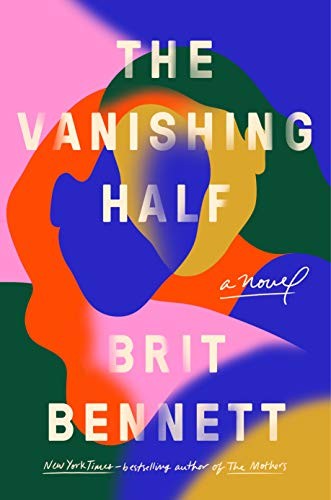
The Vanishing Half
Brit Bennett (2020)
“Twin sisters flee a Black town that polices their Blackness — one vanishes into white America, and the next generation inherits choices they never got to make.”
This page prints on a single page. Use Ctrl+P / Cmd+P.
The Vanishing Half
Brit Bennett (2020) · 343pages · Contemporary · 3 AP appearances
Summary
Identical twin sisters Desiree and Stella Vignes grow up in Mallard, Louisiana — a light-skinned Black community that prizes pale skin above all else. At sixteen they run away to New Orleans. Years later, Stella disappears into white America, passing as a white woman and marrying a white man. Desiree returns to Mallard with her dark-skinned daughter Jude. Decades pass; the sisters never reunite. Their daughters — Jude and Kennedy — find each other in Los Angeles, carrying their mothers' secrets across a racial divide neither fully understands.
Why It Matters
The Vanishing Half became a cultural touchstone within months of publication — a #1 New York Times bestseller that spent over a year on the list and generated immediate academic discussion. It is the first major American novel to put passing and trans identity in structural parallel, offering a n...
Themes & Motifs
Diction & Style
Register: Controlled and clear — literary without being ornate, using precision rather than lyricism as its primary tool
Narrator: Third-person limited, shifting between characters with smooth transitions. Bennett does not adopt a single narrative ...
Figurative Language: Moderate
Historical Context
1954–1988, contemporary African American experience across the Civil Rights era and its aftermath: The novel's sweep from 1954 to 1988 maps directly onto the transformation of Black America's public identity from Jim Crow to Black Power to the complex aftermath. Passing meant something different...
Key Characters
Talking Points
- Why does Bennett structure the novel around the daughters rather than giving us a direct confrontation between Stella and Desiree? What would be lost if the sisters were the primary protagonists?
- Mallard was founded on the dream of ever-lighter descendants. How does this founding mythology function as the novel's 'original sin'? How does it differ from white racism, and how does it overlap?
- Stella and Reese both choose identities different from the ones assigned at birth. Bennett draws a structural parallel between them. Is the parallel fair? Are passing and transitioning morally equivalent?
- Jude grows up 'too dark' by Mallard's standards. No one ever directly tells her she is less beautiful or less worthy. How does the novel show the transmission of colorist damage without explicit statement?
- Bennett refuses to give us a full cathartic reunion between the twins. Is this a failure of resolution, or is the refusal of catharsis itself the novel's argument?
Notable Quotes
“The town was founded by a formerly enslaved man named Alphonse Decuir, who had dreamed, so the story went, of a town full of beautiful people.”
“She had spent the past eight years trying to disappear, and now, in the most visible way possible, she was home.”
“She had become an expert at surviving inside the lie.”
Why Read This
Because race in America is almost never a simple white/Black binary, and this novel gives you the tools to think about the gradations — colorism, passing, the hierarchies within communities — that the simple story erases. And because identity is t...