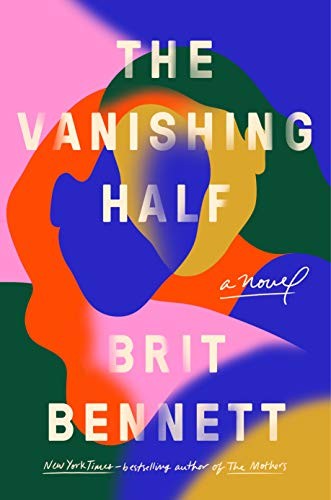
The Vanishing Half
Brit Bennett (2020)
“Twin sisters flee a Black town that polices their Blackness — one vanishes into white America, and the next generation inherits choices they never got to make.”
The Vanishing Half— Summary & Analysis
by Brit Bennett · published 2020 · 343 pages · Contemporary
A user-friendly study guide for The Vanishing Half by Brit Bennett (2020): a high-level plot summary, full chapter-by-chapter analysis, theme breakdowns, character profiles, and 30 essay questions designed for ap-english, college readers. Unlike a stock summary, sumsumsum.com adds a diction analysis drawn from Brit Bennett’s actual text, the 3 documented AP Literature exam appearances of this book, and reading-difficulty guidance (Easy, 2/10) so students, teachers, and lifelong readers know what they are walking into.
“Twin sisters flee a Black town that polices their Blackness — one vanishes into white America, and the next generation inherits choices they never got to make.”
Short Summary
Identical twin sisters Desiree and Stella Vignes grow up in Mallard, Louisiana — a light-skinned Black community that prizes pale skin above all else. At sixteen they run away to New Orleans. Years later, Stella disappears into white America, passing as a white woman and marrying a white man. Desiree returns to Mallard with her dark-skinned daughter Jude. Decades pass; the sisters never reunite. Their daughters — Jude and Kennedy — find each other in Los Angeles, carrying their mothers' secrets across a racial divide neither fully understands.
Detailed Summary
Mallard, Louisiana is a town founded by a formerly enslaved man who dreamed of lighter and lighter descendants until they crossed out of Blackness entirely. The Vignes twins, Desiree and Stella, grow up there in the 1950s — stunning, inseparable, and light enough to pass. When their father is lynche...
Chapter-by-Chapter Analysis
If you liked The Vanishing Half, read next
Start with Passing by Nella Larsen — The original passing novel — Bennett's direct predecessor, set in 1920s Harlem. Larsen's Clare Kendry is the template Stella updates for the late 20th century. Then try The Known World by Edward P. Jones — Jones excavates how Black communities absorb and perpetuate racial hierarchies — in his case, Black slaveowners; in Bennett's, Mallard's colorism. Or pivot to The Underground Railroad by Colson Whitehead — Whitehead and Bennett are the defining Black American novelists of the 2010s-2020s — both use genre conventions (escape narrative, family saga) to excavate racial history with literary precision.
For comparative essays, pair The Vanishing Half with
The strongest comparative pairing is Homegoing (Yaa Gyasi) — Another multi-generational novel tracing a family across centuries of Black history — different origin (Ghana/slavery), same structural interest in how the past travels through descendants. For a third angle, contrast with Americanah (Chimamanda Ngozi Adichie) — A Nigerian woman discovers she is 'Black' in America — the reverse of Bennett's passing plot, but equally concerned with how racial categories are constructed rather than inherent.
Each of these pairings opens a clean thesis path on shared themes, period diction, or formal influence — useful for AP Lit / IB / first-year college comparative essays.