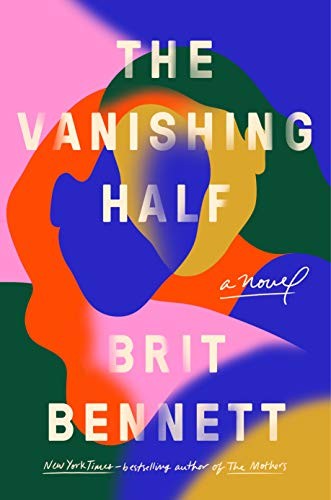
The Vanishing Half
Brit Bennett (2020)
“Twin sisters flee a Black town that polices their Blackness — one vanishes into white America, and the next generation inherits choices they never got to make.”
The Vanishing Half— Historical Context & Author Background
Author: Brit Bennett · Published 2020· Era: Contemporary·343 pages
Themes explored: race, identity, passing, family, secrets, community, transformation
About Brit Bennett
Brit Bennett was born in 1990 in Southern California to a Black family with roots in Louisiana. She grew up in Oceanside, California, and attended Stanford and the University of Michigan's MFA program. Her debut novel, The Mothers (2016), also examined community, secrets, and Black womanhood. The Vanishing Half was her second novel and became a #1 New York Times bestseller and an instant literary landmark. Bennett has spoken about drawing on family stories of passing and on her own experience navigating light-skinned Black identity in America. At thirty, she wrote the most critically acclaimed novel about racial passing since Passing by Nella Larsen (1929).
Life → Text Connections
How Brit Bennett's real experiences shaped specific elements of The Vanishing Half.
Bennett grew up in Southern California with Louisiana roots — the novel spans both geographies
Jude's escape from Louisiana to UCLA, and the Brentwood sections of Stella's life, carry the weight of personal familiarity
Bennett knows both worlds from the inside — the small Southern town and the California suburb — and renders both without caricature.
Bennett's family has histories of light-skinned Black identity and the social pressures that attend it
Mallard's colorism and the passing plot are drawn from a real tradition of Black American experience, not invented as a thought experiment
The novel's emotional authority comes from this rootedness — it is not a white author's speculation about Black experience but a Black author's reckoning with a specific history.
Bennett's MFA training gives her access to literary tradition — she is acutely aware of passing narratives from Larsen, Johnson, Faulkner
The novel engages with the passing genre while updating it — the 2020 context adds trans identity, colorism discourse, and contemporary LA as a setting
The Vanishing Half knows its literary ancestors and is deliberately in conversation with them, which gives it depth beyond the immediate plot.
Historical Era
1954–1988, contemporary African American experience across the Civil Rights era and its aftermath
How the Era Shapes the Book
The novel's sweep from 1954 to 1988 maps directly onto the transformation of Black America's public identity from Jim Crow to Black Power to the complex aftermath. Passing meant something different in 1954 (survival strategy in a legally segregated world) than in 1988 (choice in a formally desegregated but structurally racist one). Bennett tracks how that shift in context changes the moral valence of Stella's decision across time.
Why The Vanishing Half Matters Historically
The Vanishing Half became a cultural touchstone within months of publication — a #1 New York Times bestseller that spent over a year on the list and generated immediate academic discussion. It is the first major American novel to put passing and trans identity in structural parallel, offering a new framework for thinking about chosen versus assigned identity. It also revived serious literary attention to colorism — a topic that had been discussed in social discourse for decades but rarely given this kind of novelistic treatment.
- First major American novel to parallel racial passing and trans identity as structurally equivalent identity questions
- Revived the literary passing narrative (dormant since Larsen's era) for a 21st-century readership
- Brought colorism within Black communities to the center of literary fiction rather than treating it as a subsidiary concern
Has appeared on challenged book lists primarily for its depiction of a trans character and for its treatment of race and colorism as systemic rather than individual issues. Challenges reflect broader culture-war targeting of books that center Black or LGBTQ experiences without framing them as problems to be solved.