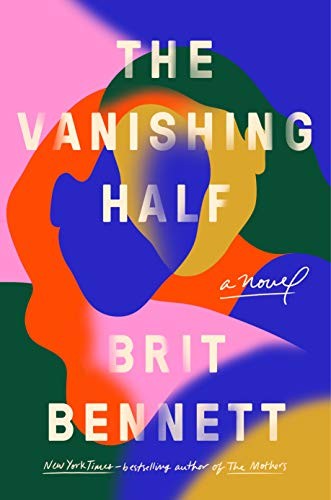
The Vanishing Half
Brit Bennett (2020)
“Twin sisters flee a Black town that polices their Blackness — one vanishes into white America, and the next generation inherits choices they never got to make.”
Language Register
Controlled and clear — literary without being ornate, using precision rather than lyricism as its primary tool
Syntax Profile
Bennett favors mid-length sentences with clean subordinate clauses — accessible but not simple. She uses sentence fragments sparingly and to great effect, usually to mark a character's internal caesura. Dialogue is naturalistic and unshowy. The prose's power comes from what is withheld rather than from rhetorical elaboration.
Figurative Language
Moderate — Bennett uses figurative language surgically rather than ornately. Her metaphors tend toward the domestic and embodied (secrets as houses, race as texture, time as current). She resists the Beautiful Sentence in favor of the True One.
Era-Specific Language
A Black person living as white — carrying the full weight of American racial history in a single gerund
The fictional Louisiana town whose colorism is the novel's original wound
Period-appropriate racial designation in 1950s-60s sections; signals the era's racial taxonomy
N/A — unlike Gatsby, Bennett's characters do not use affected speech as identity markers, except Stella's consciously flattened accent
Refers to passing as white — 'living the life' or 'choosing the life' in dialogue among those who know
How Characters Speak — Class & Identity
Stella
Her speech in Brentwood has no accent, no markers of Louisiana or Blackness — she has worked to flatten and neutralize it. In memory-flashback scenes with Desiree, traces of the original voice return.
Language as racial performance — Stella has erased her voice as thoroughly as her name.
Desiree
Speaks plainly, with warmth, carrying the cadences of Mallard and Louisiana — not performing anything, not neutralizing anything.
Authenticity has a regional accent. Desiree's unwillingness to pass is audible.
Kennedy
Actor's speech — wide range, deliberate, self-conscious. Performs language rather than simply using it. This is partly professional, partly a symptom of not knowing who she actually is.
A life built on performance, all the way down.
Jude
Quiet, observational — she speaks less than she thinks. Her narration is more interior than dialogue-heavy, reflecting a person who learned early to watch rather than proclaim.
Colorism's wound — those diminished by it often learn to speak less, to take up less room.
Reese
Sparse, direct. He says what he means with a minimum of elaboration. This is character, not limitation — his economy is the economy of someone who knows exactly who he is.
Self-knowledge expressed through linguistic economy.
Narrator's Voice
Third-person limited, shifting between characters with smooth transitions. Bennett does not adopt a single narrative voice — she modulates register to match her character's interiority. When in Stella, the prose is controlled and surface-monitored. When in Jude, it is more porous, more open to memory and feeling. This flexibility is itself an argument about identity: who we are shapes how the world looks.
Tone Progression
Parts 1-2
Elegiac, grounded, watchful
The establishment of Mallard's world and the damage already done — Bennett's prose is steady and observational, setting up the terms before it tests them.
Parts 3-4
Warmer, more uncertain
The next generation takes over. Jude and Kennedy both carry something unsettled; the prose opens to accommodate youth, love, and the shock of encounter.
Part 5 and themes
Compressed, honest, quietly devastating
The novel stops promising resolution and delivers instead the harder truth: some distances are not fully crossable. The prose gets quieter as it gets more devastating.
Stylistic Comparisons
- Toni Morrison — both excavate how race lives in communities and families, though Bennett is more narratively propulsive and less mythic
- Edward P. Jones (The Known World) — similarly interested in how Black communities internalize racial hierarchies
- Zadie Smith (NW) — contemporary literary fiction that takes race seriously without making it the only lens
- Colson Whitehead (The Intuitionist) — race and passing as metaphysical conditions, rendered through domestic realism
Key Vocabulary from This Book
Notable words used in this text — click to see full definitions