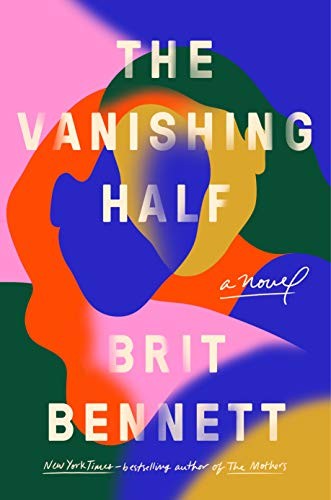
The Vanishing Half
Brit Bennett (2020)
“Twin sisters flee a Black town that polices their Blackness — one vanishes into white America, and the next generation inherits choices they never got to make.”
Essay Questions & Food for Thought
30questions designed to challenge assumptions and provoke original thinking. These can't be answered from a summary — you need the actual text.
Why does Bennett structure the novel around the daughters rather than giving us a direct confrontation between Stella and Desiree? What would be lost if the sisters were the primary protagonists?
Mallard was founded on the dream of ever-lighter descendants. How does this founding mythology function as the novel's 'original sin'? How does it differ from white racism, and how does it overlap?
Stella and Reese both choose identities different from the ones assigned at birth. Bennett draws a structural parallel between them. Is the parallel fair? Are passing and transitioning morally equivalent?
Jude grows up 'too dark' by Mallard's standards. No one ever directly tells her she is less beautiful or less worthy. How does the novel show the transmission of colorist damage without explicit statement?
Bennett refuses to give us a full cathartic reunion between the twins. Is this a failure of resolution, or is the refusal of catharsis itself the novel's argument?
Stella's friendship with Loretta Walker is built on Loretta not knowing who Stella really is. Is it a real friendship? Can you love someone honestly while concealing your fundamental identity from them?
Kennedy is an actress who does not know her own identity. How does Bennett use Kennedy's profession to comment on performance, authenticity, and race?
The novel was published in 2020, during a summer of major national reckoning with race. Does that context change how you read the passing narrative? Does the book speak to this moment in ways it couldn't have twenty years earlier?
Desiree marries Sam Winston, the darkest man she can find. Is this an act of political resistance, self-punishment, or something else? What does the novel suggest about her motivation?
The title The Vanishing Half refers to Stella. But by the end of the novel, which half of which characters has vanished? How many 'vanishing halves' can you identify?
How does Reese's experience of waiting for surgery parallel the novel's broader theme of living in a body that doesn't fully match who you are?
Stella watches silently as the Walkers are driven from her neighborhood by white residents' racism. Why doesn't she intervene? Is her silence inexcusable, or do you understand it?
Bennett has said she was in conversation with Nella Larsen's Passing (1929) when writing this novel. What might The Vanishing Half be saying that 1929 couldn't — and what does Larsen's Irene Redfield have in common with Stella?
Early Jones is a bounty hunter — someone who finds people who don't want to be found. How does his profession comment on the novel's themes of disappearance and identity?
Desiree's dark-skinned daughter is the most visible person in Mallard — the opposite of invisible. How does the novel use Jude's visibility in Mallard versus her relative anonymity in Los Angeles?
The novel spans 1954–1988. Why those specific dates? What historical events bracket the narrative, and why does Bennett stop in 1988 rather than bringing the story to the present?
If Stella had never passed — had stayed in New Orleans, married a Black man, lived a Black life — would the novel exist? What does the story require that choice to generate?
Compare Mallard to Tom Buchanan's Long Island in The Great Gatsby. Both communities enforce rigid hierarchies. What is different about a hierarchy enforced from within a marginalized community versus one enforced from a dominant class?
Kennedy does not know she is Black. If she never finds out — if her drive to Mallard turns up nothing — does her life of unknowing harm anyone? Is ignorance of racial heritage a loss or just a neutral fact?
How does Bennett use the physical geography of the novel — Mallard, New Orleans, Brentwood, Los Angeles — to map her characters' inner landscapes?
Is Stella a feminist figure? She achieves financial independence, professional respect, and upper-class status through her own intelligence and strategic thinking. Does it matter that she achieves these things by pretending to be white?
The novel ends with Kennedy driving to Mallard rather than with a conversation between the twins. Why? What does Kennedy finding Mallard accomplish that a Stella-Desiree reconciliation wouldn't?
Bennett never gives us Stella's internal experience of the moment she decided to pass. We see the aftermath but not the decision. Why does she withhold this?
How does the novel treat motherhood? Both Desiree and Stella are mothers. How do their approaches to motherhood reflect their fundamental differences — and what do they share?
Jude and Reese's relationship is the novel's most emotionally stable. What makes it work, while the other major relationships — Stella and Blake, Desiree and Sam — are damaged or destroyed?
The passing narrative has a long history in American literature (Larsen, Johnson, Faulkner, Twain). What does Bennett add to or complicate in this tradition by setting her version in the 1960s-80s rather than the early 20th century?
Which character in The Vanishing Half most resembles you, and why? What does your answer reveal about what the novel is asking its readers to examine in themselves?
If social media existed in the novel's timeline — if Stella were passing in 2020 rather than 1968 — would her passing be possible? What does the novel suggest about the relationship between visibility and identity?
Bennett said in interviews that she wanted to write about identity as 'not fixed but chosen.' By the end of the novel, do you agree? Is identity something you choose, something you're born into, or something that happens to you?
The Vanishing Half was published the same year as Homegoing by Yaa Gyasi and in the same decade as Colson Whitehead's The Underground Railroad — all multi-generational novels that trace Black American experience across historical time. What does this genre of 'generational Black American history' novel tell us about what American literature is working through right now?