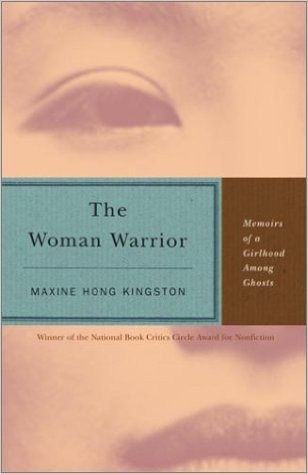
The Woman Warrior
Maxine Hong Kingston (1976)
“A Chinese-American daughter untangles what is myth, what is memory, and what silence has buried — and discovers that telling stories is the only way to survive.”
This page prints on a single page. Use Ctrl+P / Cmd+P.
The Woman Warrior
Maxine Hong Kingston (1976) · 209pages · Contemporary / Postcolonial · 6 AP appearances
Summary
Maxine Hong Kingston weaves together Chinese legend, her mother's talk-stories, and her own experience growing up as a Chinese-American girl in Stockton, California, to interrogate what it means to be a woman, a daughter, and an immigrant caught between two worlds. Structured as five linked narratives — each a meditation on silence, gender, and the power of storytelling — the book refuses easy categorization as memoir, myth, or fiction, because Kingston insists the borders between them are exactly the problem.
Why It Matters
The Woman Warrior was one of the first Asian-American texts to reach a mainstream American literary audience. It won the National Book Critics Circle Award for nonfiction in 1976 and was immediately adopted into university curricula. It has never gone out of print. It is now routinely cited as on...
Themes & Motifs
Diction & Style
Register: Fluid and shifting — moves between mythic incantation, domestic memoir, ethnographic documentation, and adolescent intimacy without signaling transitions
Narrator: Kingston: multiple, layered, intentionally unreliable. She inhabits Fa Mu Lan in first person. She reconstructs her m...
Figurative Language: High
Historical Context
1940s–1970s Chinese-American experience; published 1976 at the height of the American ethnic literature movement: The Chinese-American community Kingston grew up in was shaped by decades of legal exclusion, intentional invisibility, and survival through insularity. The silence that pervades the book is not onl...
Key Characters
Talking Points
- Kingston opens with 'You must not tell anyone what I am about to tell you' — and then tells everyone. What is the significance of this opening violation? What kind of book announces itself through disobedience?
- Kingston imagines at least three different versions of the No Name Woman's desire — rape, consensual affair, vanity. Why does she offer multiple versions rather than choosing one? What does this formal choice say about women's histories?
- Is The Woman Warrior memoir, fiction, or mythology? What do you lose by forcing it into only one of those categories?
- Fa Mu Lan disguises herself as a man to wield power. Kingston says the swordswoman and she are 'not so dissimilar.' In what way? Does Kingston have to disguise herself to write this book?
- Brave Orchid was a doctor in China and a laundry worker in America. What does immigration do to credentials? What does it do to identity?
Notable Quotes
“You must not tell anyone what I am about to tell you.”
“My aunt haunts me — her ghost drawn to me because now, after fifty years of neglect, I alone devote pages to her.”
“The Chinese are always very frightened of the drowned one, whose weeping ghost, wet hair hanging and skin bloated, waits silently by the water to p...”
Why Read This
Because it will make you rethink what a memoir is allowed to do. Kingston refuses to separate what happened from what was imagined, what she was told from what she invented, what is myth from what is history. That refusal is not confusion — it is ...