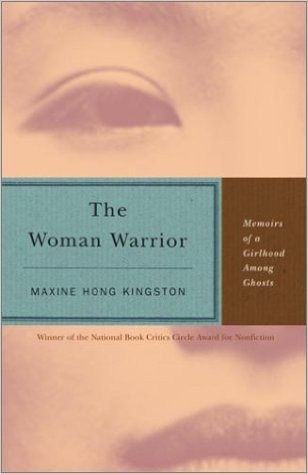
The Woman Warrior
Maxine Hong Kingston (1976)
“A Chinese-American daughter untangles what is myth, what is memory, and what silence has buried — and discovers that telling stories is the only way to survive.”
For Students
Because it will make you rethink what a memoir is allowed to do. Kingston refuses to separate what happened from what was imagined, what she was told from what she invented, what is myth from what is history. That refusal is not confusion — it is the most honest accounting of how memory actually works. And if you've ever felt caught between two cultures, two languages, two versions of yourself that won't reconcile, this book was written about and for you.
For Teachers
The formal hybridity makes it ideal for teaching the constructed nature of genre — and for showing students that the distinction between fiction and nonfiction is often a policing mechanism rather than a description of reality. Each chapter can anchor a separate unit: silence and gender ('No Name Woman'), myth and self-invention ('White Tigers'), immigration and credential erasure ('Shaman'), language and identity ('At the Western Palace'), and voice and reconciliation ('A Song for a Barbarian Reed Pipe'). The book rewards close reading at every level.
Why It Still Matters
Every generation produces new versions of the questions Kingston asks: What do you inherit from your family that you didn't choose? What do you lose by assimilating, and what do you lose by refusing to? Whose stories get told and why? Whose names get spoken and whose get erased? The Woman Warrior doesn't answer these questions — it teaches you how to hold them.