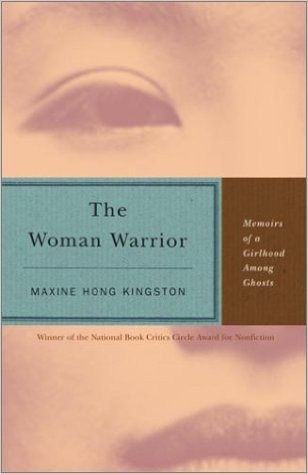
The Woman Warrior
Maxine Hong Kingston (1976)
“A Chinese-American daughter untangles what is myth, what is memory, and what silence has buried — and discovers that telling stories is the only way to survive.”
The Woman Warrior— Summary & Analysis
by Maxine Hong Kingston · published 1976 · 209 pages · Contemporary / Postcolonial
A user-friendly study guide for The Woman Warrior by Maxine Hong Kingston (1976): a high-level plot summary, full chapter-by-chapter analysis, theme breakdowns, character profiles, and 30 essay questions designed for ap-english, college readers. Unlike a stock summary, sumsumsum.com adds a diction analysis drawn from Maxine Hong Kingston’s actual text, the 6 documented AP Literature exam appearances of this book, and reading-difficulty guidance (Easy, 3/10) so students, teachers, and lifelong readers know what they are walking into.
“A Chinese-American daughter untangles what is myth, what is memory, and what silence has buried — and discovers that telling stories is the only way to survive.”
Short Summary
Maxine Hong Kingston weaves together Chinese legend, her mother's talk-stories, and her own experience growing up as a Chinese-American girl in Stockton, California, to interrogate what it means to be a woman, a daughter, and an immigrant caught between two worlds. Structured as five linked narratives — each a meditation on silence, gender, and the power of storytelling — the book refuses easy categorization as memoir, myth, or fiction, because Kingston insists the borders between them are exactly the problem.
Detailed Summary
The Woman Warrior opens with a prohibition: 'You must not tell anyone what I am about to tell you.' Kingston's mother, Brave Orchid, reveals the story of a great-aunt who drowned herself and her illegitimate child in the family well. The aunt is never named, never mourned, erased from family memory....
Summary in the Author’s Writing Style
A retelling of The Woman Warrior in Maxine Hong Kingston’s style — so you can hear the language, not just the plot. This is a stylistic pastiche written by sumsumsum, not an excerpt from the book.
You must not tell anyone, my mother said, what I am about to tell you, and then she told me, and so the first thing I ever learned about storytelling is that it begins by forbidding itself. There was an aunt once, a sister of my father's, who swelled with a child no husband had given her and who, on…
Chapter-by-Chapter Analysis
If you liked The Woman Warrior, read next
Start with Beloved by Toni Morrison — Both books make the suppressed histories of women — erased, unnamed, unmourned — haunt the present as literal and figurative ghosts that demand to be reckoned with.
For comparative essays, pair The Woman Warrior with
The strongest comparative pairing is The Joy Luck Club (Amy Tan) — Chinese-American mother-daughter tensions across immigration and generational divide — Tan's more resolved ending measures the distance from Kingston's irresolution. Another productive pairing is I Know Why the Caged Bird Sings (Maya Angelou) — Another foundational memoir of a young woman of color recovering her voice after silencing — Angelou's silencing is trauma-induced where Kingston's is cultural, but the trajectory from silence to speech connects them. For a third angle, contrast with The House on Mango Street (Sandra Cisneros) — A Chicana girl negotiating between cultural inheritance and American identity — similar form (short linked sections), similar themes, and a debt to Kingston's formal innovations.
Each of these pairings opens a clean thesis path on shared themes, period diction, or formal influence — useful for AP Lit / IB / first-year college comparative essays.