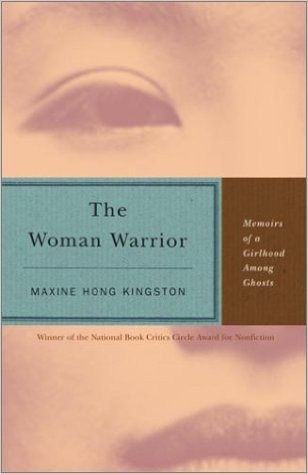
The Woman Warrior
Maxine Hong Kingston (1976)
“A Chinese-American daughter untangles what is myth, what is memory, and what silence has buried — and discovers that telling stories is the only way to survive.”
Essay Questions & Food for Thought
30questions designed to challenge assumptions and provoke original thinking. These can't be answered from a summary — you need the actual text.
Kingston opens with 'You must not tell anyone what I am about to tell you' — and then tells everyone. What is the significance of this opening violation? What kind of book announces itself through disobedience?
Kingston imagines at least three different versions of the No Name Woman's desire — rape, consensual affair, vanity. Why does she offer multiple versions rather than choosing one? What does this formal choice say about women's histories?
Is The Woman Warrior memoir, fiction, or mythology? What do you lose by forcing it into only one of those categories?
Fa Mu Lan disguises herself as a man to wield power. Kingston says the swordswoman and she are 'not so dissimilar.' In what way? Does Kingston have to disguise herself to write this book?
Brave Orchid was a doctor in China and a laundry worker in America. What does immigration do to credentials? What does it do to identity?
Kingston torments the silent Chinese-American classmate in the bathroom. She is cruel to the girl for the same quality she hates in herself. What is this episode about — cruelty, self-hatred, fear, or something else?
Moon Orchid's husband is polite, calm, and says nothing false. Is he a villain? Can a person do enormous harm without being cruel?
Kingston's mother cut under her tongue 'to lessen her shyness.' Kingston later reimagines this as a gift of speech. What is the difference between an act of love that causes harm and an act of harm dressed as love?
White people are called 'ghosts' throughout the book. What does this reversal of the usual racial gaze accomplish? What does it feel like to be named the ghost in someone else's story?
The book ends with Kingston and Brave Orchid sharing a story — speaking alternate lines. What does this ending say about the relationship between mother and daughter that all the confrontations couldn't resolve?
Kingston admits she cannot verify which stories her mother told her and which she invented. Does this admission make the book more or less trustworthy? What is the relationship between honesty and uncertainty?
Brave Orchid tells her daughters that girls are useless — 'feeding girls is feeding cowbirds.' She also tells them the story of Fa Mu Lan. How can both things be true about the same mother?
Compare Moon Orchid and Brave Orchid. Both are Chinese immigrant women in California. One survives; one doesn't. What accounts for the difference? Is it individual character, language, luck, or something else?
The No Name Woman's village raided her family's house collectively — as a community. How does Kingston analyze collective punishment? What is the relationship between community and violence in this book?
Kingston describes Fa Mu Lan having her family's grievances carved into her back. What is the relationship between writing, pain, and protest? Is the body the most permanent page?
Kingston spent three years nearly mute at American school. How does language operate as a border — keeping some people inside power and some outside it? Who decided English was the required language?
Is this book a feminist text? What kind of feminism does it practice? Is it compatible with the feminism of its 1976 moment?
Frank Chin accused Kingston of distorting Chinese mythology and pandering to white audiences by depicting Chinese culture as misogynistic. How do you evaluate this critique? What is an ethnic writer's obligation to their community of origin?
The Sitting Ghost sits on women's chests and suppresses their breath. What does this ghost represent? What are the 'Sitting Ghosts' in Kingston's own life?
Kingston describes her voice as 'a cripple's voice.' Later she says the reed pipe's song crossed a language barrier that words couldn't. What is the difference between a speaking voice and a singing voice — and what can art do that direct statement cannot?
Moon Orchid is happy in her madness. She is institutionalized, but she has found a coherent world inside her delusions. Is this happiness or tragedy? Can a person be both?
The book is dedicated to 'the women who are brave.' Why not 'the women who are silent' or 'the women who survived'? What does Kingston mean by brave — and does every woman in the book meet that definition?
Compare The Woman Warrior to I Know Why the Caged Bird Sings. Both are memoirs about a young woman of color finding her voice. What different versions of that finding do the two books offer?
Kingston blurs what her mother told her and what she invented. If you can't verify the stories that shaped you, are they any less real? What is the difference between a truth and a fact?
The Woman Warrior was published in 1976, at the height of the feminist and ethnic studies movements. How does its 1976 publication context shape how it was received — and how would it be received differently today?
Ts'ai Yen made her reed-pipe music from the instruments of the barbarians who captured her. Kingston writes in English, the language of the culture that made her invisible. Is the comparison exact? What does it mean to use a captor's tools?
How does The Woman Warrior compare to The Joy Luck Club? Both deal with Chinese-American mother-daughter relationships and immigration. What does each book do that the other doesn't?
If the No Name Woman could read Kingston's chapter about her, would she feel honored or violated? Is imagining someone's interiority without their consent an act of love or a form of colonization?
Kingston's silence at school was broken in stages. Name the stages. What finally allowed her to speak — and what does that arc say about how people recover from silencing?
What would it mean for a contemporary reader — someone who has never felt between two cultures — to have a Woman Warrior of their own? What are the talk-stories of your inheritance, and what happens when you refuse to repeat them?