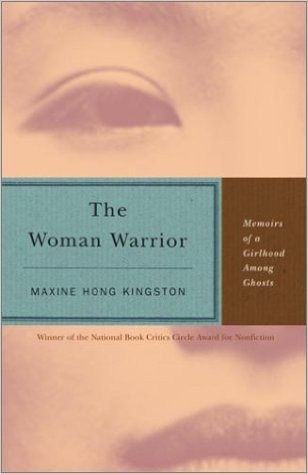
The Woman Warrior
Maxine Hong Kingston (1976)
“A Chinese-American daughter untangles what is myth, what is memory, and what silence has buried — and discovers that telling stories is the only way to survive.”
The Woman Warrior— Historical Context & Author Background
Author: Maxine Hong Kingston · Published 1976· Era: Contemporary / Postcolonial·209 pages
Themes explored: identity, gender, silence, storytelling, immigration, culture, power, voice
About Maxine Hong Kingston
Maxine Hong Kingston was born in 1940 in Stockton, California, the first American-born child of Chinese immigrants. Her father ran a laundry; her mother Brave Orchid (the book's central figure) had been a medical student in China. Kingston won eleven scholarships to UC Berkeley, studied English literature, and eventually published The Woman Warrior in 1976 when she was 36. It won the National Book Critics Circle Award for nonfiction — which immediately prompted debate about whether it was nonfiction at all, since it blends myth and memoir without delineating the border. Kingston has said the ambiguity is the point.
Life → Text Connections
How Maxine Hong Kingston's real experiences shaped specific elements of The Woman Warrior.
Kingston grew up in a Cantonese-speaking household and was functionally mute at American school for several years
The final chapter's detailed account of school silence, the black paintings, the failure of her American voice
The silence is not metaphor — it was a real experience of bilingual paralysis. Kingston's recovery of her voice is the book's literal as well as figurative achievement.
Her mother Brave Orchid was a medical doctor in China who became a laundry worker in America
The 'Shaman' chapter, which reconstructs Brave Orchid's training and the Sitting Ghost confrontation
Kingston is writing the version of her mother that immigration erased. The book restores what America took.
Kingston has an aunt who was erased from family history — the No Name Woman is based on a real prohibition she received as a child
The first chapter and its governing act of transgressive remembrance
The book begins with a real secret and a real family command to stay silent. Kingston's first literary act is disobedience.
Kingston wrote the book in her thirties, looking back at a childhood she was only then able to process with adult language
The retrospective structure — the adult Kingston narrating events she experienced as a child, with the analytical distance she didn't have then
The retrospective gap is where the book lives. Understanding requires distance. The book is the distance.
Historical Era
1940s–1970s Chinese-American experience; published 1976 at the height of the American ethnic literature movement
How the Era Shapes the Book
The Chinese-American community Kingston grew up in was shaped by decades of legal exclusion, intentional invisibility, and survival through insularity. The silence that pervades the book is not only personal or gendered — it is political, the silence of a community that had learned to be unseen as a survival strategy. Kingston's act of speaking loudly is also a political act: she is refusing the invisibility her community had been forced to adopt.
Why The Woman Warrior Matters Historically
The Woman Warrior was one of the first Asian-American texts to reach a mainstream American literary audience. It won the National Book Critics Circle Award for nonfiction in 1976 and was immediately adopted into university curricula. It has never gone out of print. It is now routinely cited as one of the most important American memoirs of the twentieth century and as a foundational text in both Asian-American studies and feminist literary criticism.
- One of the first Asian-American books to win a major American literary award
- Pioneer of the hybrid memoir-mythology form — blending personal narrative with cultural legend without flagging the transition
- One of the earliest American texts to systematically analyze the relationship between gender, silence, and narrative power from an immigrant perspective
Challenged in high schools and colleges primarily for its frank treatment of sexuality, the No Name Woman's story, and its critical portrayal of Chinese patriarchal culture. Also challenged for being 'anti-Chinese' by critics who felt Kingston's depictions of Chinese misogyny harmed the community's image — a censorship rationale that reveals the same silencing logic the book is arguing against.