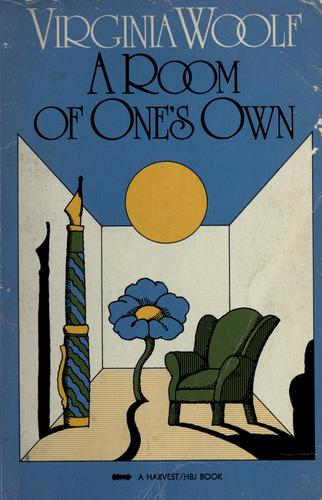
A Room of One's Own
Virginia Woolf (1929)
“A woman needs money and a room of her own to write fiction — but the sentence is only the beginning. Behind it lies four centuries of locked doors, burned manuscripts, invented sisters, and the long material history of why genius requires a bank account.”
A Room of One's Own— Summary & Analysis
by Virginia Woolf · published 1929 · 172 pages · Modernist
A user-friendly study guide for A Room of One's Own by Virginia Woolf (1929): a high-level plot summary, full chapter-by-chapter analysis, theme breakdowns, character profiles, and 30 essay questions designed for ap-english, college readers. Unlike a stock summary, sumsumsum.com adds a diction analysis drawn from Virginia Woolf’s actual text, the 7 documented AP Literature exam appearances of this book, and reading-difficulty guidance (Moderate, 4/10) so students, teachers, and lifelong readers know what they are walking into.
“A woman needs money and a room of her own to write fiction — but the sentence is only the beginning. Behind it lies four centuries of locked doors, burned manuscripts, invented sisters, and the long material history of why genius requires a bank account.”
Short Summary
Based on two lectures Woolf delivered at Cambridge in 1928, the extended essay argues that women have been systematically denied the material and intellectual conditions necessary for creative work. Woolf traces the absence of women from literary history not to lack of talent but to lack of money, education, and private space. She invents Judith Shakespeare — William's equally gifted sister — to demonstrate what would have happened to a female genius in the sixteenth century: poverty, exploitation, madness, suicide. The essay moves through the British Museum, through Oxbridge colleges, through centuries of male pronouncements about women, arriving at a vision of the androgynous mind as the ideal creative consciousness.
Detailed Summary
A Room of One's Own began as two lectures delivered at Newnham and Girton Colleges, Cambridge, in October 1928 — the women's colleges, underfunded and peripheral to the university's power. Woolf expanded the lectures into a book-length essay published in 1929, and it became the founding text of mode...
Summary in the Author’s Writing Style
A retelling of A Room of One's Own in Virginia Woolf’s style — so you can hear the language, not just the plot. This is a stylistic pastiche written by sumsumsum, not an excerpt from the book.
You asked me to speak of women and fiction, and I sat down to consider what those words might mean, and almost at once I found that I could not consider anything at all; for the question, which had seemed so simple when it lay folded in your letter, unfolded into a great many other questions, each o…
Chapter-by-Chapter Analysis
If you liked A Room of One's Own, read next
Start with Pride and Prejudice by Jane Austen — Woolf's ideal woman writer — the one who found 'a perfectly natural, shapely sentence proper for her own use.' Reading Austen after Woolf's essay changes how you see the achievement: not just talent but the successful navigation of impossible conditions.. Or pivot to Narrative of the Life of Frederick Douglass by Frederick Douglass — The same structural argument applied to race rather than gender: Douglass demonstrates that literacy and intellectual freedom require material conditions (freedom from slavery), and that the denial of those conditions is the mechanism of oppression, not the result of natural inferiority..
For comparative essays, pair A Room of One's Own with
The strongest comparative pairing is The Awakening (Kate Chopin) — Edna Pontellier's struggle for autonomy and creative expression in 1899 New Orleans dramatizes exactly what Woolf theorizes — a woman with artistic impulses destroyed by material and social conditions that offer no room of her own.. Another productive pairing is Jane Eyre (Charlotte Bronte) — The novel Woolf critiques most directly in the essay — admired for its genius, faulted for the anger that interrupts the fiction. Reading Jane Eyre alongside Woolf's analysis transforms both texts.. For a third angle, contrast with The Bell Jar (Sylvia Plath) — Plath's novel about a woman whose creative ambitions collide with 1950s gender expectations is a direct descendant of Woolf's argument — Esther Greenwood is Judith Shakespeare surviving into the twentieth century, still confined..
Each of these pairings opens a clean thesis path on shared themes, period diction, or formal influence — useful for AP Lit / IB / first-year college comparative essays.
More from Virginia Woolf and the scholars who study Woolf
Other works by Virginia Woolf: Mrs. Dalloway (1925, 194 pages), To the Lighthouse (1927, 209 pages). Reading two or three of these in sequence reveals Virginia Woolf’s recurring obsessions and stylistic signatures more clearly than any single book can.
The standard scholarly entry points to Virginia Woolf’s work: Hermione Lee (Oxford, Wolfson College President Emerita) — Virginia Woolf (1996); Quentin Bell (Sussex, Woolf's nephew) — Virginia Woolf: A Biography (1972). These are the works graduate seminars cite when teaching Virginia Woolf.