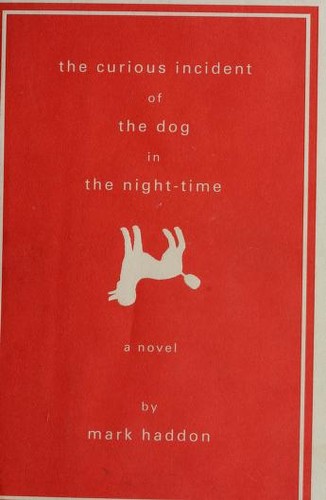
The Curious Incident of the Dog in the Night-Time
Mark Haddon (2003)
“A murder mystery told by a narrator who cannot lie, cannot understand metaphor, and cannot leave his street — until he does.”
The Curious Incident of the Dog in the Night-Time— Summary & Analysis
by Mark Haddon · published 2003 · 226 pages · Contemporary / Early 21st Century
A user-friendly study guide for The Curious Incident of the Dog in the Night-Time by Mark Haddon (2003): a high-level plot summary, full chapter-by-chapter analysis, theme breakdowns, character profiles, and 30 essay questions designed for middle-school, high-school, ap-english readers. Unlike a stock summary, sumsumsum.com adds a diction analysis drawn from Mark Haddon’s actual text, the 4 documented AP Literature exam appearances of this book, and reading-difficulty guidance (Easy, 1/10) so students, teachers, and lifelong readers know what they are walking into.
“A murder mystery told by a narrator who cannot lie, cannot understand metaphor, and cannot leave his street — until he does.”
Short Summary
Fifteen-year-old Christopher Boone, who is highly logical and processes the world differently from neurotypical people, discovers his neighbor's dog Wellington has been murdered with a garden fork. Forbidden by his father from investigating, Christopher investigates anyway — and uncovers a far more devastating mystery about his own family. His mother did not die two years ago. She left. The investigation leads Christopher to travel alone from Swindon to London to find her, a journey that represents the most terrifying and triumphant act of his life.
Detailed Summary
Christopher John Francis Boone is fifteen years old and knows all the countries in the world, all the prime numbers up to 7,057, and the square roots of most numbers. He does not understand human emotions when they are performed on faces. He does not like being touched. He does not like the colors y...
Summary in the Author’s Writing Style
A retelling of The Curious Incident of the Dog in the Night-Time in Mark Haddon’s style — so you can hear the language, not just the plot. This is a stylistic pastiche written by sumsumsum, not an excerpt from the book.
It was 7 minutes after midnight. The dog was lying on the grass in the front garden of Mrs Shears' house. Its name was Wellington. There was a garden fork sticking out of it. I think the fork must have gone all the way through the dog and into the ground because the fork had not fallen over. My name…
Chapter-by-Chapter Analysis
If you liked The Curious Incident of the Dog in the Night-Time, read next
Start with The Catcher in the Rye by J.D. Salinger — Another teenage narrator who refuses social convention — but where Holden performs contempt as rebellion, Christopher reports facts as cognitive reality. Then try To Kill a Mockingbird by Harper Lee — Both novels use a child narrator whose limited perspective forces the reader to supply the emotional and ethical context the narrator cannot — both are formally about the gap between what is seen and what is understood. Or pivot to Room by Emma Donoghue — Another novel narrated by a character whose cognitive and experiential limitations create a formally distinctive voice — in both, the narrators' innocence is a structural tool, not a limitation.
For comparative essays, pair The Curious Incident of the Dog in the Night-Time with
The strongest comparative pairing is The Solitude of Prime Numbers (Paolo Giordano) — Explicitly in dialogue with Haddon's use of mathematics as emotional metaphor — prime numbers as isolation, the beautiful loneliness of numbers that cannot be divided.
Each of these pairings opens a clean thesis path on shared themes, period diction, or formal influence — useful for AP Lit / IB / first-year college comparative essays.