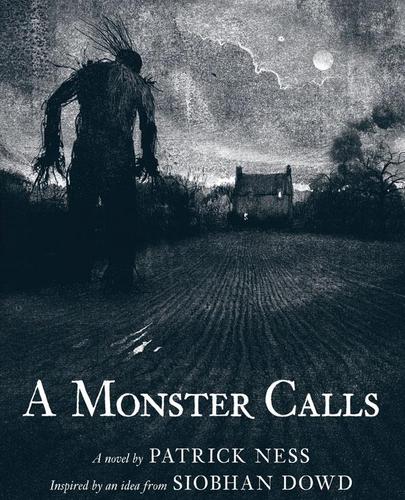
A Monster Calls
Patrick Ness (from an idea by Siobhan Dowd) (2011)
“A boy whose mother is dying summons a monster made of yew — the tree that grows in graveyards and produces the chemical used in chemotherapy. The monster does not come to heal. It comes to make Conor tell the truth.”
Why This Book Matters
Won the Carnegie Medal in 2012 — the first book to win both the Carnegie and the Kate Greenaway Medal (for Kay's illustrations) simultaneously, the only time this has happened in the awards' combined 150+ year history. Established a new category of children's literature: the 'illustrated literary novel' that is neither picture book nor chapter book but a genuine hybrid form. Became the standard text for teaching grief and loss in schools and therapeutic settings.
Firsts & Innovations
First and only book to win both the Carnegie Medal and Kate Greenaway Medal simultaneously
One of the first major children's novels to depict anticipatory grief — the grief that begins before death, not after
Pioneered the 'illustrated literary novel' as a distinct form — illustrations as co-equal narrative, not decoration
One of the first children's novels whose creation story (Dowd's death) became inseparable from its themes
Cultural Impact
Adapted into a critically acclaimed 2016 film directed by J.A. Bayona, with Liam Neeson voicing the monster
Used extensively in bereavement counseling for children and adolescents — therapeutic professionals cite the 'fourth story' as a breakthrough framework
Changed publishing norms: demonstrated that illustrated novels for older readers (age 10+) could be commercially viable
Sparked widespread discussion about anticipatory grief, caregiver guilt, and the right of children to honest conversations about death
The 'invisible man' concept entered grief counseling vocabulary — therapists use it to discuss how pity can become a form of erasure
Banned & Challenged
Occasionally challenged in schools for 'dark themes' and depictions of violence (Conor's attack on Harry, the destruction of the grandmother's room). Defenders argue that the book's entire purpose is to model healthy engagement with grief and anger — removing it from curricula would reinforce the exact silence the novel argues against.