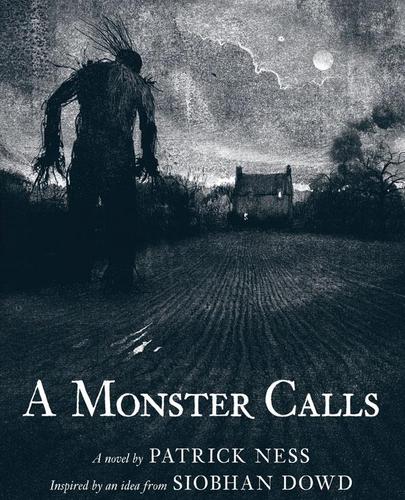
A Monster Calls
Patrick Ness (from an idea by Siobhan Dowd) (2011)
“A boy whose mother is dying summons a monster made of yew — the tree that grows in graveyards and produces the chemical used in chemotherapy. The monster does not come to heal. It comes to make Conor tell the truth.”
Similar Books
Thematic connections across eras and genres — books that talk to each other.
Where the Wild Things Are
Maurice Sendak
The foundational text: a child summons monsters to process emotions too large for words. Ness extends Sendak's premise from anger to terminal grief.
The Book Thief
Markus Zusak
Both use non-human narrators (Death, the monster) to approach mortality from an oblique angle — the inhuman perspective making the human grief bearable.
Bridge to Terabithia
Katherine Paterson
Another children's novel that refuses to protect its reader from death — Paterson's sudden loss and Ness's slow loss are complementary devastations.
The Ocean at the End of the Lane
Neil Gaiman
Fantasy as grief mechanism — Gaiman's narrator revisits childhood trauma through supernatural lenses, as Conor processes present trauma through the monster's stories.
A Grief Observed
C.S. Lewis
Lewis's raw adult grief memoir is the non-fiction companion to Ness's novel — both insist that honest grief is ugly, contradictory, and necessary.
The Lovely Bones
Alice Sebold
Another novel about a family broken by loss — Sebold's dead narrator watches her family grieve the way Conor's monster watches Conor grieve, from outside human experience.