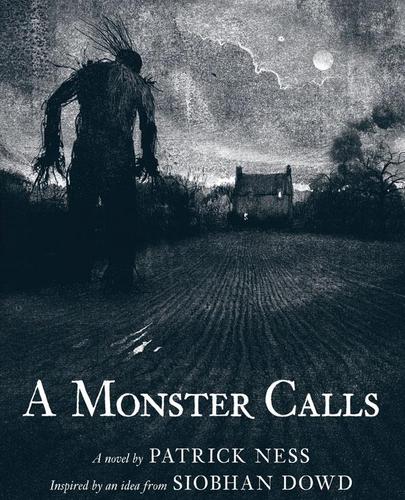
A Monster Calls
Patrick Ness (from an idea by Siobhan Dowd) (2011)
“A boy whose mother is dying summons a monster made of yew — the tree that grows in graveyards and produces the chemical used in chemotherapy. The monster does not come to heal. It comes to make Conor tell the truth.”
A Monster Calls— Summary & Analysis
by Patrick Ness (from an idea by Siobhan Dowd) · published 2011 · 215 pages · Contemporary
A user-friendly study guide for A Monster Calls by Patrick Ness (from an idea by Siobhan Dowd) (2011): a high-level plot summary, full chapter-by-chapter analysis, theme breakdowns, character profiles, and 30 essay questions designed for middle-school, high-school readers. Unlike a stock summary, sumsumsum.com adds a diction analysis drawn from Patrick Ness (from an idea by Siobhan Dowd)’s actual text, the 1 documented AP Literature exam appearance of this book, and reading-difficulty guidance (Easy, 2/10) so students, teachers, and lifelong readers know what they are walking into.
“A boy whose mother is dying summons a monster made of yew — the tree that grows in graveyards and produces the chemical used in chemotherapy. The monster does not come to heal. It comes to make Conor tell the truth.”
Short Summary
Thirteen-year-old Conor O'Malley is dealing with his mother's terminal cancer when a yew tree monster visits him at 12:07 a.m. The monster tells Conor three stories that systematically dismantle fairy-tale logic — no clear heroes, no clean morals — then demands Conor tell a fourth: the truth about his recurring nightmare. Conor must finally admit that he wants his mother's suffering to end, even if that means she dies. The monster catches him as he lets go.
Detailed Summary
Conor O'Malley is thirteen years old, and his mother is dying of cancer. He knows this, though everyone around him — his mother, his grandmother, his teachers — refuses to say it plainly. Conor has a recurring nightmare he will not describe: a church graveyard, a pit opening, his mother falling, and...
Chapter-by-Chapter Analysis
If you liked A Monster Calls, read next
Start with Where the Wild Things Are by Maurice Sendak — The foundational text: a child summons monsters to process emotions too large for words. Ness extends Sendak's premise from anger to terminal grief.. Then try The Book Thief by Markus Zusak — Both use non-human narrators (Death, the monster) to approach mortality from an oblique angle — the inhuman perspective making the human grief bearable.. Or pivot to The Ocean at the End of the Lane by Neil Gaiman — Fantasy as grief mechanism — Gaiman's narrator revisits childhood trauma through supernatural lenses, as Conor processes present trauma through the monster's stories..
For comparative essays, pair A Monster Calls with
The strongest comparative pairing is Bridge to Terabithia (Katherine Paterson) — Another children's novel that refuses to protect its reader from death — Paterson's sudden loss and Ness's slow loss are complementary devastations.. For a third angle, contrast with The Lovely Bones (Alice Sebold) — Another novel about a family broken by loss — Sebold's dead narrator watches her family grieve the way Conor's monster watches Conor grieve, from outside human experience..
Each of these pairings opens a clean thesis path on shared themes, period diction, or formal influence — useful for AP Lit / IB / first-year college comparative essays.