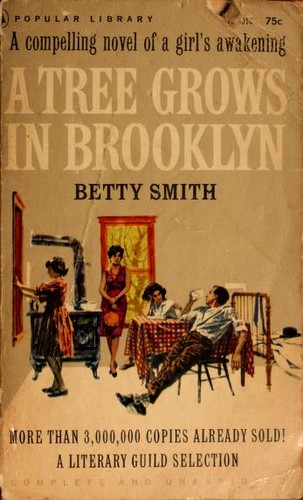
A Tree Grows in Brooklyn
Betty Smith (1943)
“A girl in the Brooklyn tenements discovers that reading, writing, and sheer stubbornness can grow through concrete — just like the Tree of Heaven in her backyard.”
Why This Book Matters
Published in 1943, A Tree Grows in Brooklyn was an instant bestseller — 300,000 copies in its first year. It arrived during WWII, when Americans were hungry for stories of resilience and immigrant grit. The novel became a cultural touchstone for the working class: millions of readers saw their own childhoods in Francie's. It was one of the first major American novels to center a girl's intellectual awakening in the context of poverty, predating the 'women's literary fiction' category by decades.
Firsts & Innovations
One of the first American novels to treat a girl's hunger for education as the central dramatic engine
Pioneered the 'Brooklyn novel' as a literary genre — the template for subsequent generations of New York immigrant fiction
One of the earliest bestsellers to depict poverty without either romanticizing it or treating it as moral failure
Cultural Impact
Adapted into an acclaimed 1945 film directed by Elia Kazan (his first feature)
Became a standard middle-school and high-school text, introducing millions to literary realism
The Tree of Heaven became a cultural symbol for immigrant resilience — 'growing through concrete'
Influenced generations of coming-of-age writers including Sandra Cisneros, Jesmyn Ward, and Jacqueline Woodson
Remains in print continuously since 1943 — over 80 years of unbroken readership
Banned & Challenged
Occasionally challenged for sexual content (the Rhynor episode, Sissy's sexual freedom), depictions of alcoholism, and 'negative' portrayals of poverty. Also challenged for being 'depressing' — which, like Gatsby's 'un-American' challenges, rather proves the novel's point.