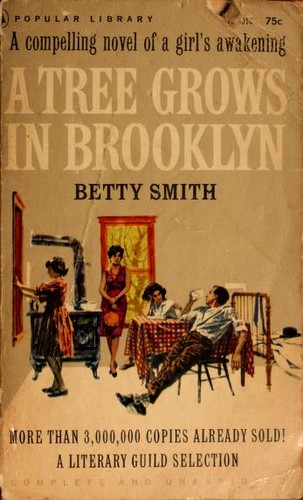
A Tree Grows in Brooklyn
Betty Smith (1943)
“A girl in the Brooklyn tenements discovers that reading, writing, and sheer stubbornness can grow through concrete — just like the Tree of Heaven in her backyard.”
For Students
Because Francie Nolan is the reader who reads her way out. If you've ever felt invisible in a classroom, if you've ever known that books understood you better than people did, if you've ever been told your real life isn't an appropriate topic for writing — this is the novel that says you're right and they're wrong. Also: it's 493 pages and reads like 200, because Smith's prose is that clean.
For Teachers
Accessible enough for middle school, rich enough for AP. The novel supports units on immigration, class, gender, education, and the American Dream without requiring extensive historical scaffolding — Smith builds the context into the narrative. The diction analysis is straightforward: plain prose, dialect markers, the child's-eye maturation of the narrative voice. Pairs brilliantly with The Great Gatsby as an alternative American Dream narrative — Gatsby from the top, Francie from the bottom.
Why It Still Matters
Every generation has its Francie — a kid with no money, no connections, and a library card, trying to turn reading into a life. The novel's argument that education is survival, not enrichment, is more relevant in 2026 than it was in 1943. And the Tree of Heaven still grows in Brooklyn. You can go see it.