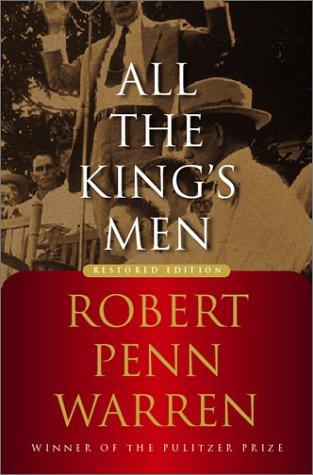
All the King's Men
Robert Penn Warren (1946)
“A man who believed in nothing watches a man who believed in everything seize a state by the throat — and discovers that the nothing he believed in was just the truth he refused to look at.”
At a Glance
Jack Burden, a disillusioned journalist turned political operative, narrates the rise and fall of Willie Stark, a Southern governor who begins as a dirt-road idealist and becomes a ruthless demagogue. As Jack carries out Willie's orders — digging up dirt on enemies, destroying reputations — he discovers that every person he loves is connected to every crime he uncovers, and that the philosophy of detachment he has cultivated since childhood is not wisdom but cowardice. The novel is about what happens when you find out the truth about people and then have to decide whether knowing the truth makes you responsible for what happens next.
Read full summary →Why This Book Matters
All the King's Men won the Pulitzer Prize for Fiction in 1947 and is consistently ranked among the greatest American novels of the twentieth century. It established the political novel as a form capable of philosophical depth — not merely a story about elections and power plays but a meditation on the nature of knowledge, responsibility, and moral agency. It also gave American literature one of its most enduring character types: the brilliant, disillusioned narrator who discovers that his detachment was complicity.
Diction Profile
Mixed. Jack's philosophical reflections are highly formal and rhetorically complex. His descriptions of political action are colloquial, punchy, almost journalistic. Willie's speeches are raw, populist, biblical in rhythm. The register shifts track Jack's emotional state: when he is detached, the prose is ornate; when he is wounded, it goes flat.
Very high. Warren was a poet (he won the Pulitzer for poetry as well as fiction), and his prose is saturated with metaphor, simile, and symbolic imagery. The spider web, the twitch, the highway, the hospital, the house of the past