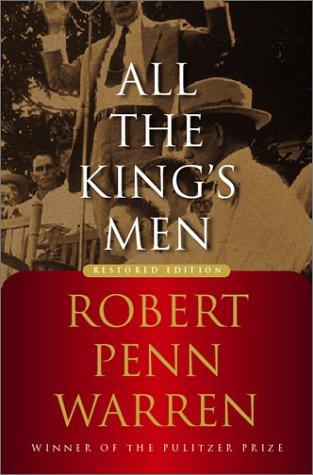
All the King's Men
Robert Penn Warren (1946)
“A man who believed in nothing watches a man who believed in everything seize a state by the throat — and discovers that the nothing he believed in was just the truth he refused to look at.”
Similar Books
Thematic connections across eras and genres — books that talk to each other.
The Great Gatsby
F. Scott Fitzgerald
Another educated narrator watching a self-made titan build an empire on illusion — but where Nick Carraway merely observes, Jack Burden participates, and the moral stakes are correspondingly higher
Invisible Man
Ralph Ellison
Published six years later — another novel about a narrator whose identity is shaped by powerful men who use him, and who must reconstruct his selfhood after discovering the machinery he served
The Sound and the Fury
William Faulkner
The other great Southern modernist novel about the burden of the past — where Faulkner fragments consciousness to show the past invading the present, Warren uses a single narrator whose detachment IS the invasion
Crime and Punishment
Fyodor Dostoevsky
The same investigation of whether intellectual justification can absorb the moral weight of action — Raskolnikov's theory that great men are above morality is the Great Twitch in Russian dress
Heart of Darkness
Joseph Conrad
Another narrator who follows power into its dark interior and discovers complicity — Marlow's journey to Kurtz prefigures Jack's journey to Willie, and both narrators are changed by proximity to charismatic destruction
Native Son
Richard Wright
Published six years earlier — a novel about power, determinism, and moral agency in an American system designed to crush individual choice, asking the same question Warren asks: can you be responsible in a world that denies you agency?