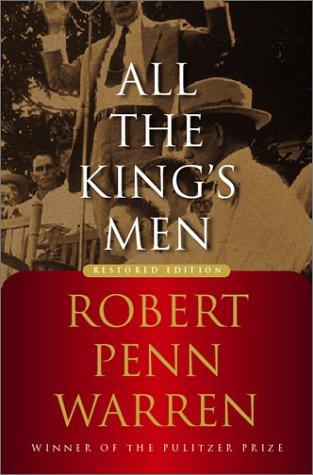
All the King's Men
Robert Penn Warren (1946)
“A man who believed in nothing watches a man who believed in everything seize a state by the throat — and discovers that the nothing he believed in was just the truth he refused to look at.”
Why This Book Matters
All the King's Men won the Pulitzer Prize for Fiction in 1947 and is consistently ranked among the greatest American novels of the twentieth century. It established the political novel as a form capable of philosophical depth — not merely a story about elections and power plays but a meditation on the nature of knowledge, responsibility, and moral agency. It also gave American literature one of its most enduring character types: the brilliant, disillusioned narrator who discovers that his detachment was complicity.
Firsts & Innovations
First American novel to treat populist demagoguery with genuine moral complexity — neither celebrating nor condemning Willie Stark but holding both his achievements and his crimes in view simultaneously
Established the 'political fixer' narrator as a literary archetype — Jack Burden's descendants include characters in works by Joan Didion, Don DeLillo, and the creators of political dramas from The West Wing to House of Cards
First novel by a major literary critic to demonstrate that New Critical close-reading principles could generate, not just analyze, great fiction
Cultural Impact
Won the Pulitzer Prize for Fiction in 1947 — established Warren as the foremost Southern literary intellectual of his generation
Adapted into an Academy Award-winning film in 1949 (Best Picture), cementing the story in American popular culture
The phrase 'all the king's men' entered political vocabulary as shorthand for the apparatus of political power — the fixers, loyalists, and operators who make the machine run
Willie Stark became the template for fictional American demagogues — every subsequent fictional populist politician owes something to Warren's characterization
The novel influenced generations of political journalists and operatives who recognized Jack Burden's moral compromises in their own careers
Warren's treatment of the Huey Long legacy shaped how Americans understood populism, demagoguery, and the tension between democracy and strong leadership
Banned & Challenged
Challenged in some school districts for its treatment of political corruption (considered too sympathetic to the demagogue), sexual content (Anne's affair with Willie, Jack's mother's serial marriages), and its philosophical complexity (some educators argued it was too morally ambiguous for high school students). The challenges rarely succeeded, partly because the novel's literary reputation was so established that banning it was more controversial than teaching it.