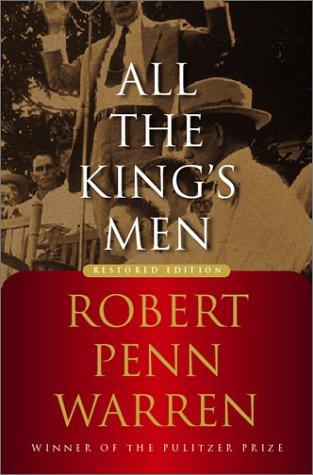
All the King's Men
Robert Penn Warren (1946)
“A man who believed in nothing watches a man who believed in everything seize a state by the throat — and discovers that the nothing he believed in was just the truth he refused to look at.”
For Students
Because you live in a world of political strongmen, populist promises, and people who tell you the system is rigged — and this novel, written eighty years ago, understood all of it better than anything on your news feed. Jack Burden is the smartest person in the room and the last one to understand what he is doing. His journey from 'nothing matters' to 'everything is connected' is the journey every thinking person has to make, and Warren writes it with a prose style so rich that reading him will permanently change how you hear English sentences.
For Teachers
The most teachable political novel in American literature because its moral complexity resists every shortcut. Students who try to reduce Willie Stark to 'villain' must contend with the roads and hospitals. Students who try to reduce Jack Burden to 'observer' must contend with the fact that his observations cause deaths. The novel rewards close reading at every level — sentence, scene, structure, philosophy — and connects directly to contemporary political questions about populism, expertise, and the relationship between personal morality and public good.
Why It Still Matters
Every generation watches a charismatic leader promise to drain the swamp and then build a new swamp. Every generation produces brilliant people who convince themselves that knowing about a problem is the same as not being responsible for it. The Great Twitch is alive and well — it is the philosophy of every person who says 'I am just doing my job' or 'I did not pull the trigger.' Warren's novel asks the hardest question: if you discovered that everyone you admire is compromised, would you use that knowledge to justify your own compromises, or would you accept the awful responsibility of choosing differently?