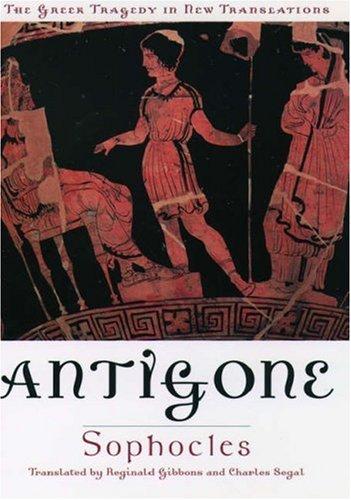
Antigone
Sophocles (-441)
“A young woman defies the state to bury her brother. The state's king breaks her. Both destroy each other — and the tragedy belongs equally to both.”
At a Glance
After the civil war that kills both sons of Oedipus, the new king Creon decrees that the rebel son Polynices must rot unburied. Antigone, the brothers' sister, defies the decree and covers the body. Creon sentences her to death. The prophet Tiresias warns that the gods are offended. Creon relents too late — Antigone has hanged herself, Creon's son Haemon (who loved Antigone) kills himself over her body, and Creon's wife Eurydice kills herself on learning of Haemon's death. Creon survives as a broken man who destroyed everything he ruled over.
Read full summary →Why This Book Matters
Antigone is the earliest surviving dramatization of the conflict between individual conscience and state authority — a conflict that has recurred in every subsequent political era. It has been performed in resistance to Nazi occupation, apartheid, military dictatorship, and colonial rule. Hegel used it as the paradigm case of tragic conflict between two equally valid ethical systems. It may be the most politically generative play ever written.
Diction Profile
Highly formal verse throughout — Greek tragic trimeter in dialogue, lyric meters in choral odes — translated into elevated English prose or blank verse depending on edition
Moderate