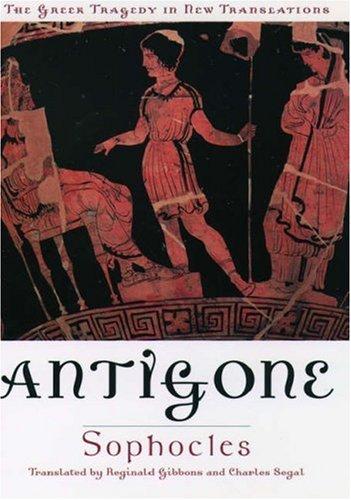
Antigone
Sophocles (-441)
“A young woman defies the state to bury her brother. The state's king breaks her. Both destroy each other — and the tragedy belongs equally to both.”
This page prints on a single page. Use Ctrl+P / Cmd+P.
Antigone
Sophocles (-441) · 60pages · Classical Antiquity · 9 AP appearances
Summary
After the civil war that kills both sons of Oedipus, the new king Creon decrees that the rebel son Polynices must rot unburied. Antigone, the brothers' sister, defies the decree and covers the body. Creon sentences her to death. The prophet Tiresias warns that the gods are offended. Creon relents too late — Antigone has hanged herself, Creon's son Haemon (who loved Antigone) kills himself over her body, and Creon's wife Eurydice kills herself on learning of Haemon's death. Creon survives as a broken man who destroyed everything he ruled over.
Why It Matters
Antigone is the earliest surviving dramatization of the conflict between individual conscience and state authority — a conflict that has recurred in every subsequent political era. It has been performed in resistance to Nazi occupation, apartheid, military dictatorship, and colonial rule. Hegel u...
Themes & Motifs
Diction & Style
Register: Highly formal verse throughout — Greek tragic trimeter in dialogue, lyric meters in choral odes — translated into elevated English prose or blank verse depending on edition
Narrator: There is no single narrator — this is drama. The Chorus serves the narrator function, mediating between the audience ...
Figurative Language: Moderate
Historical Context
Classical Athens, circa 441 BCE — age of Pericles, height of Athenian democracy and empire: The play enters a live Athenian debate about the relationship between religious obligation and civic law. Athens had just created a system in which human deliberation — the Assembly — could overrid...
Key Characters
Talking Points
- Hegel argued that Antigone is not a conflict between right and wrong but between 'right and right' — two valid ethical systems colliding. Do you agree? Is Creon's position morally defensible?
- Antigone says she would not have broken Creon's law for a husband or a child, only for a brother — because a brother cannot be replaced once both parents are dead. Is this reasoning admirable, strange, or both? What does it reveal about her?
- The Chorus of Theban elders privately sympathizes with Antigone — Haemon tells us this — but they tell Creon what he wants to hear. What does the Chorus's failure to speak represent about democratic institutions?
- Creon accuses the guard, Haemon, and Tiresias of being bribed or manipulated every time they bring him unwelcome news. What does this pattern reveal about his character — and about how authority protects itself from truth?
- Haemon gives the most persuasive argument in the play — the bending tree metaphor, the report of public opinion, the appeal to wisdom. Why does it fail? What does its failure say about the limits of reasoned argument against entrenched authority?
Notable Quotes
“I will bury him myself. And even if I die in the act, that death will be a glory.”
“You have a warm heart for cold matters.”
“No man who is his country's enemy shall call himself my friend.”
Why Read This
Because Antigone is both sides of every argument you've ever had about whether a rule is unjust and whether you have the right to break it. Sophocles gives you both protagonists, both cases, and lets the logic of each position destroy the person w...