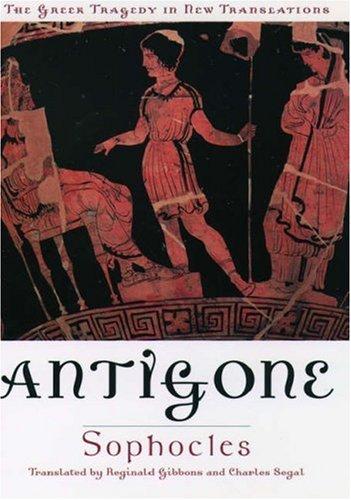
Antigone
Sophocles (-441)
“A young woman defies the state to bury her brother. The state's king breaks her. Both destroy each other — and the tragedy belongs equally to both.”
Similar Books
Thematic connections across eras and genres — books that talk to each other.
Oedipus Rex
Sophocles
Antigone's father — the predecessor tragedy that explains the curse hanging over Antigone's family and defines what hubris and fate mean in Sophocles's world
The Crucible
Arthur Miller
Another drama about individual conscience against institutional authority — Miller explicitly modeled John Proctor's death on Antigone's logic: some things are worth dying for
Medea
Euripides
The other great Greek female protagonist who defies the social order — where Antigone acts from principle, Medea acts from passion; both terrify audiences for different reasons
A Man for All Seasons
Robert Bolt
Thomas More's refusal to validate Henry VIII's divorce mirrors Antigone's structure exactly — a principled individual against absolute state authority, dying for a law the state doesn't recognize
Henry V
William Shakespeare
Creon's position — the king whose authority must be absolute for the city to function — finds its most articulate English defence in Henry V's arguments about obedience and kingship
Letter from Birmingham Jail
Martin Luther King Jr.
King's argument that unjust laws have no moral authority — and that the individual has not only the right but the duty to disobey them — is the same argument Antigone makes to Creon across 2,500 years