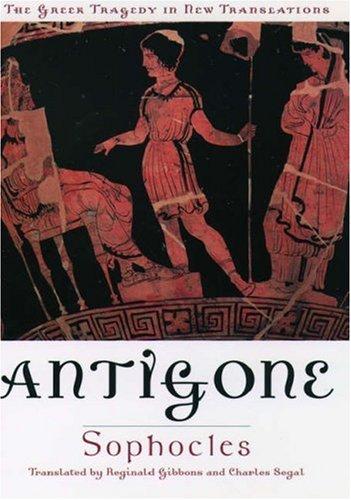
Antigone
Sophocles (-441)
“A young woman defies the state to bury her brother. The state's king breaks her. Both destroy each other — and the tragedy belongs equally to both.”
For Students
Because Antigone is both sides of every argument you've ever had about whether a rule is unjust and whether you have the right to break it. Sophocles gives you both protagonists, both cases, and lets the logic of each position destroy the person who holds it. It's 1,350 lines long. You can read the whole play in two hours. And you will be thinking about it for weeks.
For Teachers
Compact enough for a single class session, rich enough for a three-week unit. Every character presents a distinct rhetorical mode — Antigone's defiant argument, Creon's political declaration, Haemon's diplomatic counsel, Tiresias's prophetic announcement, the Chorus's cautious civic deliberation. The play is a masterclass in how the same crisis sounds different depending on who is speaking and what they stand to lose.
Why It Still Matters
Every generation finds its Creon and its Antigone. The questions the play asks — when is a law unjust? who has the authority to decide? what is owed to the dead? what is owed to the living city? — are not Greek questions. They are questions that surface whenever political authority collides with individual conscience, which is to say they surface constantly.