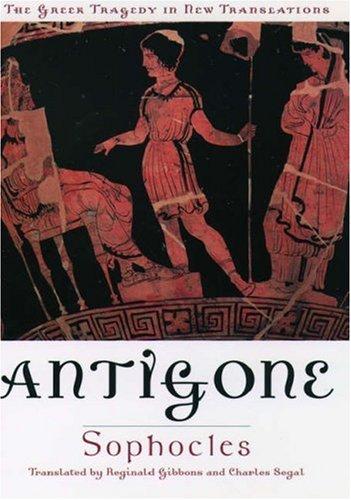
Antigone
Sophocles (-441)
“A young woman defies the state to bury her brother. The state's king breaks her. Both destroy each other — and the tragedy belongs equally to both.”
Why This Book Matters
Antigone is the earliest surviving dramatization of the conflict between individual conscience and state authority — a conflict that has recurred in every subsequent political era. It has been performed in resistance to Nazi occupation, apartheid, military dictatorship, and colonial rule. Hegel used it as the paradigm case of tragic conflict between two equally valid ethical systems. It may be the most politically generative play ever written.
Firsts & Innovations
First dramatization of civil disobedience as a philosophical and dramatic subject
One of the earliest works to give a female character a sustained political argument against male authority
Pioneered the dramatic structure of two protagonists who are both right and both wrong — what Hegel called 'the collision of right with right'
Cultural Impact
Performed by resistance movements worldwide — Jean Anouilh's 1944 adaptation played during Nazi occupation of Paris as barely disguised commentary
Hegel's lectures on aesthetics (1820s) used Antigone as the paradigm case of tragedy — influencing all subsequent philosophy of art
Cited in Supreme Court arguments about civil disobedience and conscientious objection
Bertolt Brecht adapted it in 1948 to address complicity in fascism
Seamus Heaney's adaptation The Burial at Thebes (2004) addressed the Iraq War and American unilateralism
Required reading in virtually every AP English, IB, and college humanities curriculum worldwide
Banned & Challenged
Performed against official prohibition in apartheid South Africa, under military junta in Greece (1967-1974), and during Nazi occupation of France. The play has been more frequently censored or performed in defiance of censorship than any other work of classical antiquity — which confirms that its political content reads as live and threatening, not merely historical.