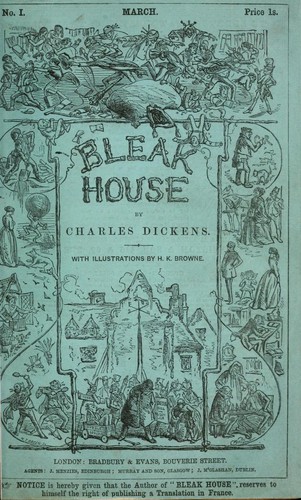
Bleak House
Charles Dickens (1853)
“A fog-bound masterpiece that invented the detective novel, condemned an entire legal system, and proved that institutions can kill as surely as any murderer.”
Why This Book Matters
Bleak House is widely considered Dickens' masterpiece and one of the greatest novels in the English language. It pioneered the detective plot in serious fiction (Inspector Bucket predates Sherlock Holmes by thirty-five years), invented the dual narration technique that later writers from Faulkner to Ferrante would adopt, and functioned as political journalism so effective it contributed to the abolition of the Court of Chancery. It is also the most structurally ambitious novel of the Victorian era — dozens of plots and characters woven into a unified argument about how institutions shape and destroy individual lives.
Firsts & Innovations
One of the first detective plots in English fiction — Inspector Bucket established templates that Wilkie Collins, Conan Doyle, and Agatha Christie would follow
First sustained use of dual narration (omniscient present-tense + first-person past-tense) in a novel
First major novel to argue explicitly that urban poverty and disease are systemic, not individual, failures
Pioneered the 'condition of England' novel — using fiction as direct political intervention
Cultural Impact
Contributed to the abolition of the Court of Chancery through the Judicature Acts of 1873-75
Inspector Bucket became the template for the literary detective — rational, methodical, genial, relentless
The fog-as-corruption metaphor entered the English literary vocabulary permanently
'Jarndyce and Jarndyce' became a byword for interminable legal proceedings — still used today
Influenced Kafka's The Trial, Pynchon's Gravity's Rainbow, and virtually every novel about institutional absurdity
Jo's death scene was among the most widely read passages in Victorian England and galvanized sanitary reform campaigns
Banned & Challenged
Not formally banned but controversial upon publication for the spontaneous combustion scene (critics called it scientifically impossible), the implicit sympathy for Lady Dedlock's 'fall,' and the portrait of Harold Skimpole (widely recognized as Leigh Hunt, causing a literary scandal). Modern challenges are rare but occasionally cite length and difficulty.