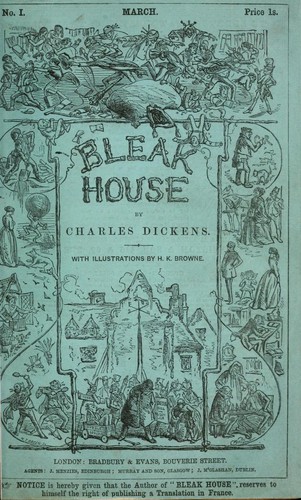
Bleak House
Charles Dickens (1853)
“A fog-bound masterpiece that invented the detective novel, condemned an entire legal system, and proved that institutions can kill as surely as any murderer.”
Similar Books
Thematic connections across eras and genres — books that talk to each other.
Great Expectations
Charles Dickens
Dickens' other great novel about identity, class, and institutional deformation — more personal and concentrated where Bleak House is panoramic
Middlemarch
George Eliot
The other candidate for greatest Victorian novel — equally complex social web, but Eliot dissects psychology where Dickens dissects institutions
The Trial
Franz Kafka
Chancery becomes literally unnameable — Kafka's bureaucratic nightmare is Bleak House stripped of all hope that the system can be reformed
The Woman in White
Wilkie Collins
Collins learned the detective plot and the dual narration from Bleak House and streamlined both into the first sensation novel
Hard Times
Charles Dickens
Dickens' most concentrated social critique — what Bleak House does to Chancery in 950 pages, Hard Times does to industrial capitalism in 300
A Tale of Two Cities
Charles Dickens
Another Dickens novel about institutional violence and individual sacrifice — the French Revolution as the ultimate systemic breakdown